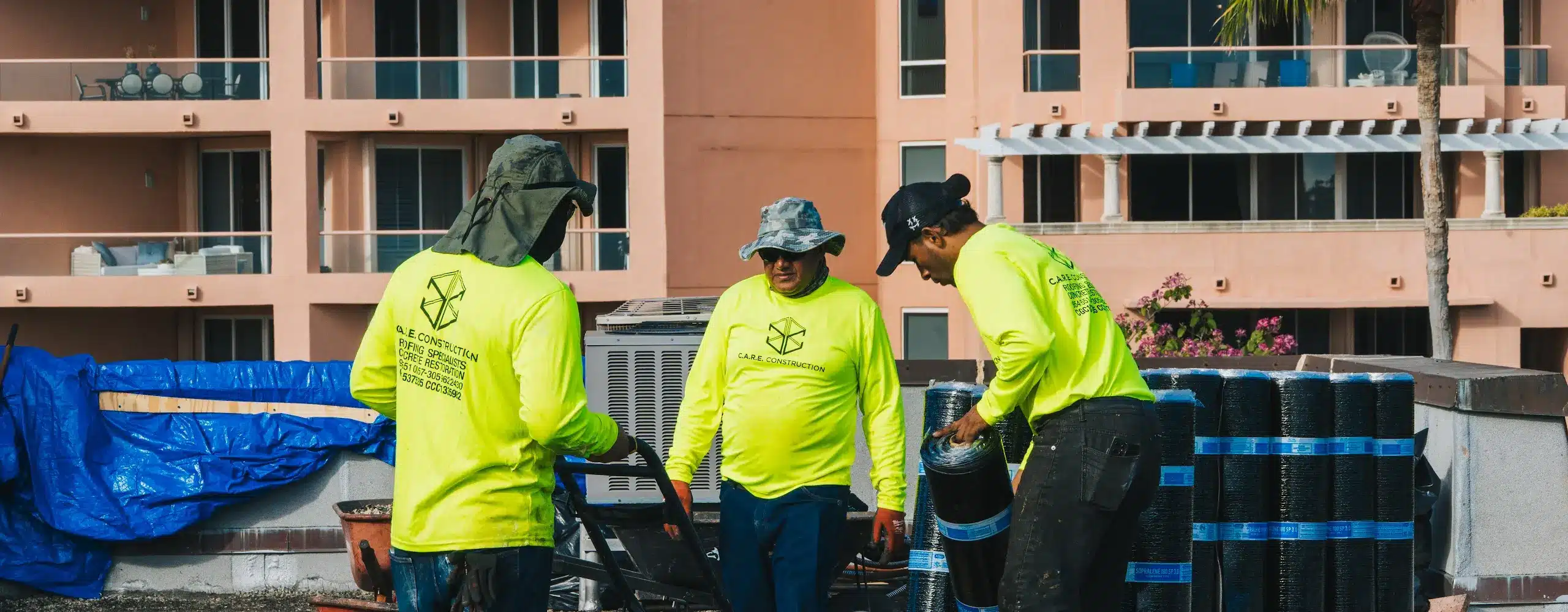
A building can appear dry for weeks and still have weaknesses in its exterior envelope.
A deteriorated joint may only leak when rain hits one elevation from a particular direction. A balcony membrane may allow moisture through during prolonged storms. A crack that appears harmless during dry weather can become a pathway once repeated rainfall begins.
By the time water is dripping through a ceiling, the moisture may have traveled through several parts of the building before becoming visible.
For South Florida condo boards and property managers, building waterproofing should therefore be addressed before recurring storms turn minor exterior defects into active leaks.
Here are five warning signs that deserve attention.
Why Waterproofing Problems Become More Visible During Rainy Weather
Water can enter around joints, cracks, windows, doors, roofs, balconies, decks, parapets, and transitions between building materials.
Wind makes the challenge greater because rain can be driven against vertical walls and openings rather than simply falling onto horizontal surfaces.
The visible stain inside is not always directly beside the opening outside.
Effective waterproofing starts by identifying the path water is taking through the building envelope.
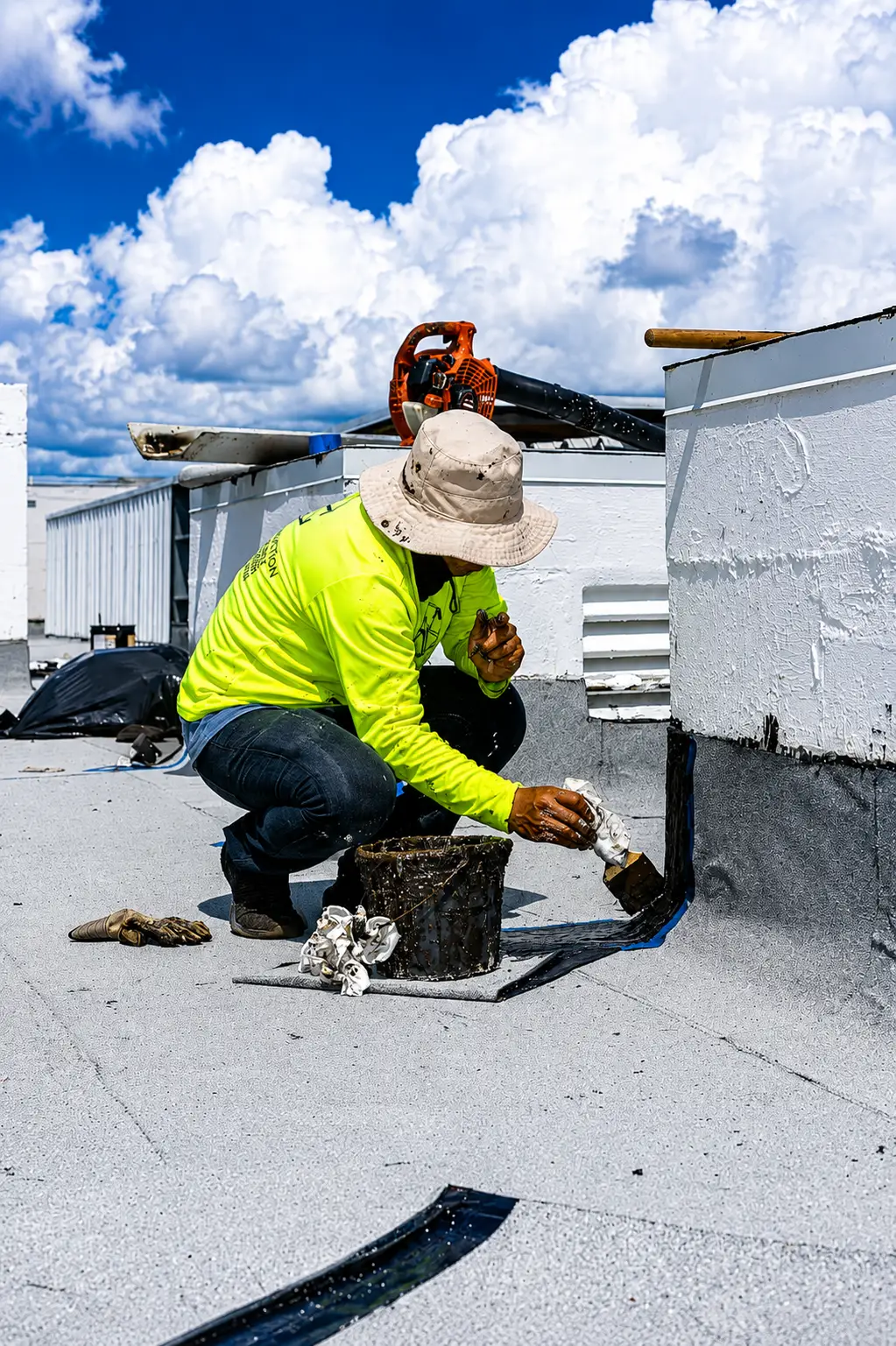
1. Water Stains Keep Appearing After Rain
Recurring staining is one of the clearest signs that moisture is moving through the property.
Stains may develop on ceilings, walls, garage slabs, balcony undersides, stairwells, or areas around windows.
The common mistake is assuming the leak begins directly above the stain.
Water may enter through a joint or crack several feet away and travel through the wall or slab before becoming visible.
Painting over the discoloration only hides the evidence.
If the stain returns after the next storm, the exterior water-entry path still needs to be identified.
For boards, tracking when leaks occur can help. A leak that only appears during wind-driven rain may point toward a wall, window, or exterior joint problem rather than an ordinary roof leak.
2. Paint and Exterior Coatings Are Peeling or Blistering
Paint failure is often treated as a cosmetic maintenance issue.
Sometimes it is, but repeated blistering, peeling, or bubbling can also indicate moisture beneath the coating.
Water behind a finish can interfere with adhesion and cause the coating to separate.
Installing another coat without investigating the substrate may provide a short-term visual improvement while the moisture problem continues.
Exterior painting should therefore follow necessary repairs rather than replace them.
If the underlying problem involves cracks, failed joints, damaged stucco, deteriorated concrete, or water intrusion, those conditions should be corrected before the final protective system is applied.
3. Cracks and Sealant Joints Are Opening
Buildings rely on joints and sealants to accommodate movement and protect transitions.
These materials are used around windows, doors, wall joints, balconies, parapets, penetrations, and many other exterior locations.
Over time, sealants can crack, shrink, harden, or separate from adjoining surfaces.
Concrete and stucco can also develop openings.
A small gap can become significant when wind-driven rain repeatedly pushes water against the exterior.
Boards should pay particular attention when cracks or failed joints develop around areas with previous leaks.
The repair should match the type of joint and surrounding construction. Applying miscellaneous caulk to every opening is not a substitute for determining how that location is supposed to manage movement and moisture.
4. Rust Stains, Efflorescence, or Concrete Damage Are Appearing
Water intrusion does not always create an active interior leak.
Sometimes the building shows evidence of moisture movement first.
White deposits on masonry or concrete can form as moisture moves soluble salts toward the surface and evaporates.
Rust-colored staining may indicate corrosion of embedded or adjacent metal.
On reinforced concrete buildings, continued moisture exposure can contribute to corrosion of reinforcing steel. That deterioration can eventually lead to cracking, delamination, and concrete spalling.
When concrete deterioration and water intrusion appear together, waterproofing and concrete restoration may need to be coordinated.
Repairing spalled concrete without addressing the water source can leave surrounding areas exposed to continued deterioration.
5. Balconies and Decks Leak or Hold Water
Horizontal exterior surfaces receive direct rainfall and need both waterproofing and effective drainage.
Balconies, plaza decks, pool decks, elevated walkways, and garage decks can develop problems when coatings wear out, membranes fail, joints deteriorate, or water collects in low areas.
A leak may become visible on the ceiling below even though the failure is on the walking surface above.
The waterproofing system also needs to work at transitions.
Wall connections, railing penetrations, drains, thresholds, joints, and deck edges can all create vulnerable locations.
Sealing the underside where water appears does not stop moisture from entering the top of the assembly.
What Areas Should Be Evaluated Before Rainy Season?
A useful waterproofing assessment should look beyond the last known leak.
The roof, parapets, exterior walls, windows and doors, construction joints, balconies, decks, sealants, drainage areas, coatings, and previous repair locations may all provide clues.
Repeated repair areas deserve particular attention.
If one wall or balcony has been patched several times but continues leaking, there is a good chance the previous repairs treated the symptom instead of the actual source.
What Does Building Waterproofing Include?
There is no single waterproofing product for every building condition.
Exterior wall problems may require crack and stucco repair followed by an appropriate protective coating.
A balcony may need concrete restoration followed by a traffic-bearing waterproofing system.
A construction joint may require removal and replacement of deteriorated sealant.
An elevated deck may need membrane restoration together with drainage and transition repairs.
The appropriate system depends on the substrate, movement, exposure, drainage, and actual water-entry path.
This is why investigation should come before product selection.
How Waterproofing Connects to Other Building Repairs
Water moves across service categories.
A roof problem can create wall damage. A failed balcony membrane can contribute to concrete spalling. A deteriorated window perimeter can create interior staining that appears unrelated to the window.
For that reason, C.A.R.E. Construction approaches waterproofing as part of the broader building envelope.
Its capabilities include exterior waterproofing, balconies, elevated walkways, pool and plaza decks, joint sealants, concrete restoration, roofing, windows and doors, and exterior repair.
Coordinating these conditions can prevent situations where one newly repaired surface needs to be removed later because the original water source was elsewhere.
Do Not Wait for an Active Leak
A building does not need water pouring through the ceiling before waterproofing deserves attention.
Failed sealants, damaged coatings, open cracks, recurring stains, and deteriorated decks are opportunities to address problems before repeated storms expose them more aggressively.
Early investigation also gives the board or property manager time to obtain proposals, schedule work, communicate with residents, and coordinate related restoration.
Effective building waterproofing starts with locating the path of moisture, repairing the underlying failure, and installing a system appropriate for the surface and exposure.
If your South Florida property is showing recurring stains, deteriorated sealants, leaking balconies, damaged coatings, or other signs of moisture intrusion, contact C.A.R.E. Construction to evaluate the affected areas before another rainy season increases the exposure.
Frequently Asked Questions About Building Waterproofing
What are the most common signs that a building needs waterproofing?
Common warning signs include recurring water stains, peeling or blistering paint, cracked sealants, open joints, efflorescence, rust staining, leaking balconies, standing water on decks, and moisture appearing after heavy rain. These conditions can indicate that water is entering through weaknesses in the building envelope.
How does building waterproofing help prevent water damage?
Building waterproofing helps reduce moisture intrusion by protecting vulnerable surfaces and sealing areas where water can enter. Depending on the property, this may include exterior walls, balconies, decks, joints, cracks, concrete surfaces, window and door perimeters, and other building-envelope transitions.
When should a South Florida building be waterproofed?
Property managers and condo boards should address known waterproofing problems before periods of frequent heavy rainfall whenever possible. Cracked coatings, deteriorated sealants, recurring leaks, and other warning signs should not be left until the rainy season exposes them more aggressively.
Can waterproofing stop an existing building leak?
Yes, when the correct source of the leak is identified and repaired. The visible stain may not be located directly below the point where water is entering, so proper waterproofing should address the actual moisture path instead of simply sealing or painting the damaged interior surface.
Is exterior painting the same as waterproofing?
No. Exterior paint may provide some surface protection, but it does not automatically correct cracks, failed joints, damaged concrete, deteriorated membranes, or other water-entry points. Waterproofing requires the underlying condition to be identified and the appropriate repair or protective system to be installed.
Why do waterproofing problems get worse during Florida’s rainy season?
Frequent heavy rainfall and wind-driven rain repeatedly expose weak areas in a building envelope. Cracks, failed sealants, deteriorated coatings, deck membranes, wall transitions, and other openings may allow more water to enter when storms become frequent and surfaces have less time to dry.
Can concrete cracks cause water intrusion?
Yes. Cracks can provide a path for moisture to move into concrete and other parts of the building. The appropriate repair depends on the crack’s location, cause, movement, and surrounding conditions, so simply covering every crack with sealant may not provide a lasting solution.
Can waterproofing help prevent concrete spalling?
Waterproofing can help reduce one of the conditions that contributes to concrete deterioration by limiting moisture penetration. However, existing spalled concrete or corroded reinforcement must still be properly repaired. Concrete restoration and waterproofing are often coordinated when moisture has contributed to the damage.
What areas of a commercial or condo building usually need waterproofing?
Common areas include balconies, elevated walkways, pool decks, plaza decks, exterior walls, concrete floors, joints, parapets, window and door perimeters, garage decks, and other locations exposed to rainfall or recurring moisture.
How often should building waterproofing be inspected?
There is no single interval that applies to every property. Inspection frequency depends on the building’s age, exposure, materials, previous repairs, waterproofing systems, and maintenance history. Condo boards and property managers should also investigate new cracks, leaks, coating failures, and sealant deterioration when they appear.
Why does a leak sometimes return after it has already been repaired?
Recurring leaks often happen when the original repair treated the visible symptom instead of the actual water-entry point. Water can travel through walls, decks, joints, and other building components before becoming visible, which is why tracing the moisture path is an important part of effective building waterproofing.
Should building waterproofing be completed before or after concrete repairs?
When concrete is already deteriorated, the damaged concrete generally needs to be properly restored before the final waterproofing or protective system is installed. The exact sequence should follow the repair design and product requirements so the new waterproofing system is installed over a suitable substrate.