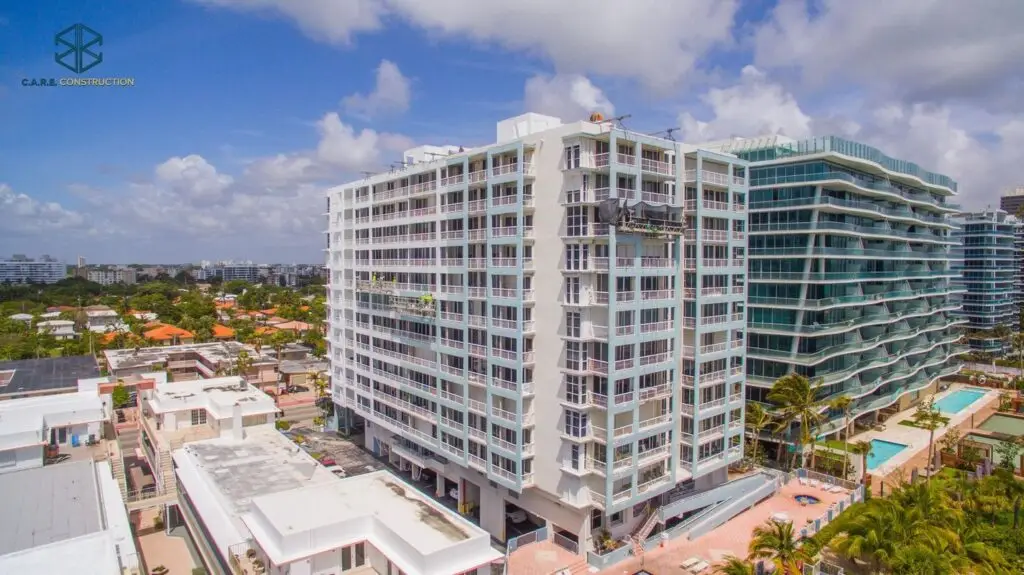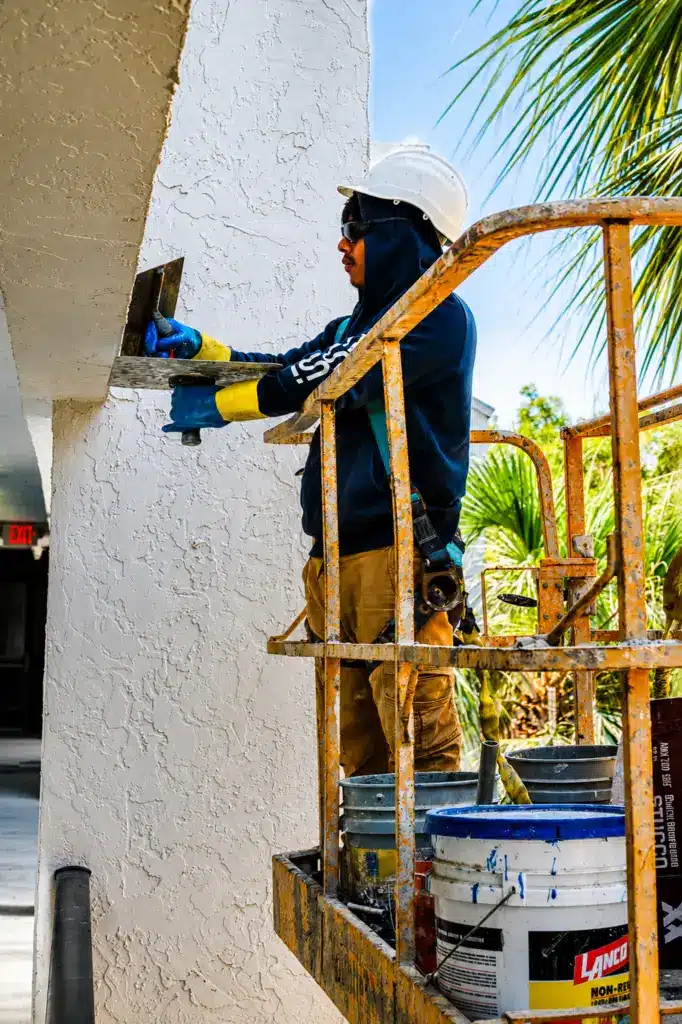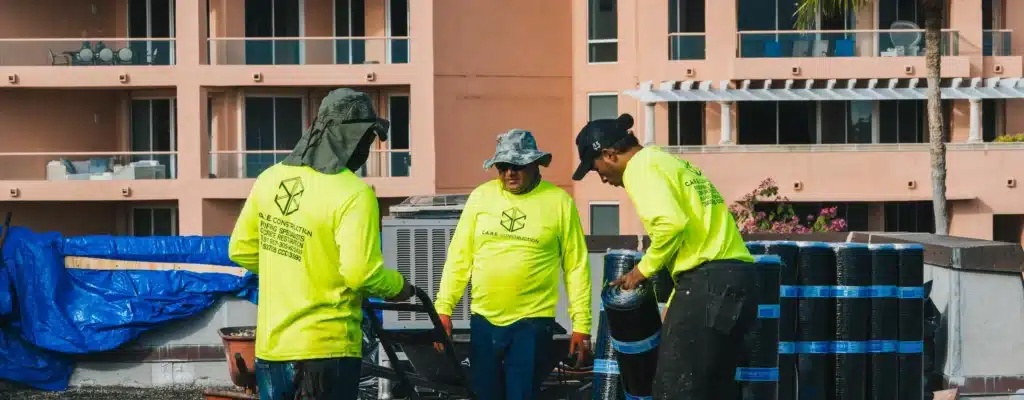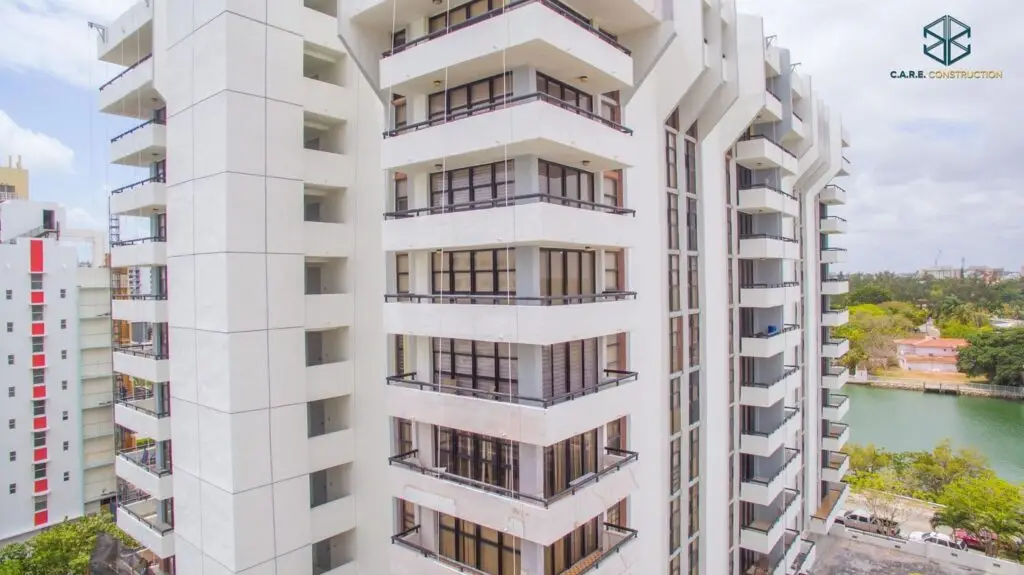

Balconies and elevated decks are among the most exposed components of a South Florida condominium.
Rain, humidity, strong sunlight, coastal salt, foot traffic, and repeated wetting affect the concrete and protective systems year after year. When waterproofing, joints, railings, or concrete begin failing, what appears to be a small maintenance problem can develop into a much larger restoration project.
A crack near a railing may allow moisture into the slab. A worn deck coating can expose concrete to repeated water intrusion. Rusting reinforcement can eventually contribute to cracking and spalling.
For condo boards considering balcony repair in Miami, FL, the goal should be to understand how the entire balcony assembly is performing before deciding what to repair.
Why Balcony Deterioration Requires More Than a Surface Repair
A balcony consists of more than the surface residents walk on.
The concrete slab, reinforcing steel, waterproofing or traffic coating, drains, joints, railing connections, wall transitions, and door thresholds all affect how the balcony manages water.
Failure in one area can damage another.
For example, water entering through a failed deck coating may reach reinforcing steel inside the slab. As corrosion progresses, concrete can crack and spall along the balcony edge or underside.
Covering the surface with a new coating without repairing deteriorated concrete underneath will not restore the damaged slab.
The opposite is also true. Repairing spalled concrete without addressing the failed waterproofing above can allow moisture exposure to continue.
What Causes Balcony and Deck Damage in Miami?
South Florida balconies face several common deterioration mechanisms.
Failed Waterproofing
Balcony waterproofing systems are constantly exposed to weather and traffic.
Over time, coatings can crack, peel, blister, lose adhesion, or wear through. Weaknesses can also develop around drains, railings, thresholds, walls, and other transitions.
Once water moves beneath the protective system, deterioration can continue even when the surface appears relatively intact.
Reinforcement Corrosion
Moisture and chlorides can eventually reach reinforcing steel within the concrete.
Corrosion creates pressure around the steel, contributing to cracking, delamination, and concrete spalling.
Rust staining and cracking along slab edges can be early signs that reinforcement needs further evaluation.
Cracks and Movement
Not every balcony crack indicates structural failure.
However, cracks can create paths for water, particularly when they repeatedly open or return after previous repairs.
Cracking near railings, structural connections, slab edges, or walls deserves closer attention when it appears with staining or deterioration.
Drainage Problems
A waterproofed deck still needs effective drainage.
Blocked drains, low areas, poor slope, or modifications to the walking surface can cause water to remain on the balcony.
Standing water increases exposure at cracks, joints, penetrations, and damaged coating areas.
Warning Signs Condo Boards Should Watch For
Board members do not need to diagnose structural conditions, but they should recognize when professional evaluation is appropriate.
Spalling or Falling Concrete
Concrete breaking from a balcony edge or underside requires attention.
Besides indicating deterioration, falling material can create an immediate hazard for residents, pedestrians, vehicles, and common areas below.
Rust Staining
Orange and brown staining can indicate corrosion of embedded reinforcement or other metal components.
Rust stains are particularly significant when they appear alongside cracking or concrete deterioration.
Water Stains Below the Balcony
Water appearing on the underside of a balcony shows that moisture has moved beyond the walking surface.
The entry point may involve a crack, membrane failure, railing penetration, threshold, drain, or wall transition.
Painting the ceiling below will not correct the source.
Peeling or Blistering Deck Coatings
A coating that is losing adhesion may no longer be protecting the substrate correctly.
Before applying another finish, the concrete and moisture conditions underneath should be evaluated.
Recurring Cracks
A crack that repeatedly returns after repair can indicate continuing movement, corrosion, or water intrusion.
Repeated sealing without investigating the cause can create an ongoing maintenance cycle.
When Does a Balcony Need Structural Repair?
The appropriate repair depends on the extent and location of deterioration.
Localized damage may require removal of unsound concrete, reinforcement preparation, concrete rebuilding, and restoration of the protective coating.
More extensive deterioration may involve slab edges, structural connections, post-tension components, or larger portions of the balcony.
Where structural conditions are involved, an appropriately licensed architect or engineer may need to evaluate the balcony and prepare repair requirements.
The contractor then performs the construction according to the approved plans, specifications, permits, and field direction.
Why Waterproofing Should Follow Concrete Restoration
Concrete restoration and waterproofing need to be properly sequenced.
If deteriorated concrete is covered with a new waterproof coating, the substrate can continue failing beneath the new finish.
Damaged concrete should be repaired first. Once the substrate is suitable, the specified waterproofing or protective system can be restored.
The waterproofing scope may need to include the deck surface, wall transitions, joints, railing penetrations, drains, thresholds, and edges.
That is important because water does not always enter directly above the stain visible below.
What Should Boards Expect During a Balcony Project?
Condo balcony restoration affects the entire property, not just the repair crew.
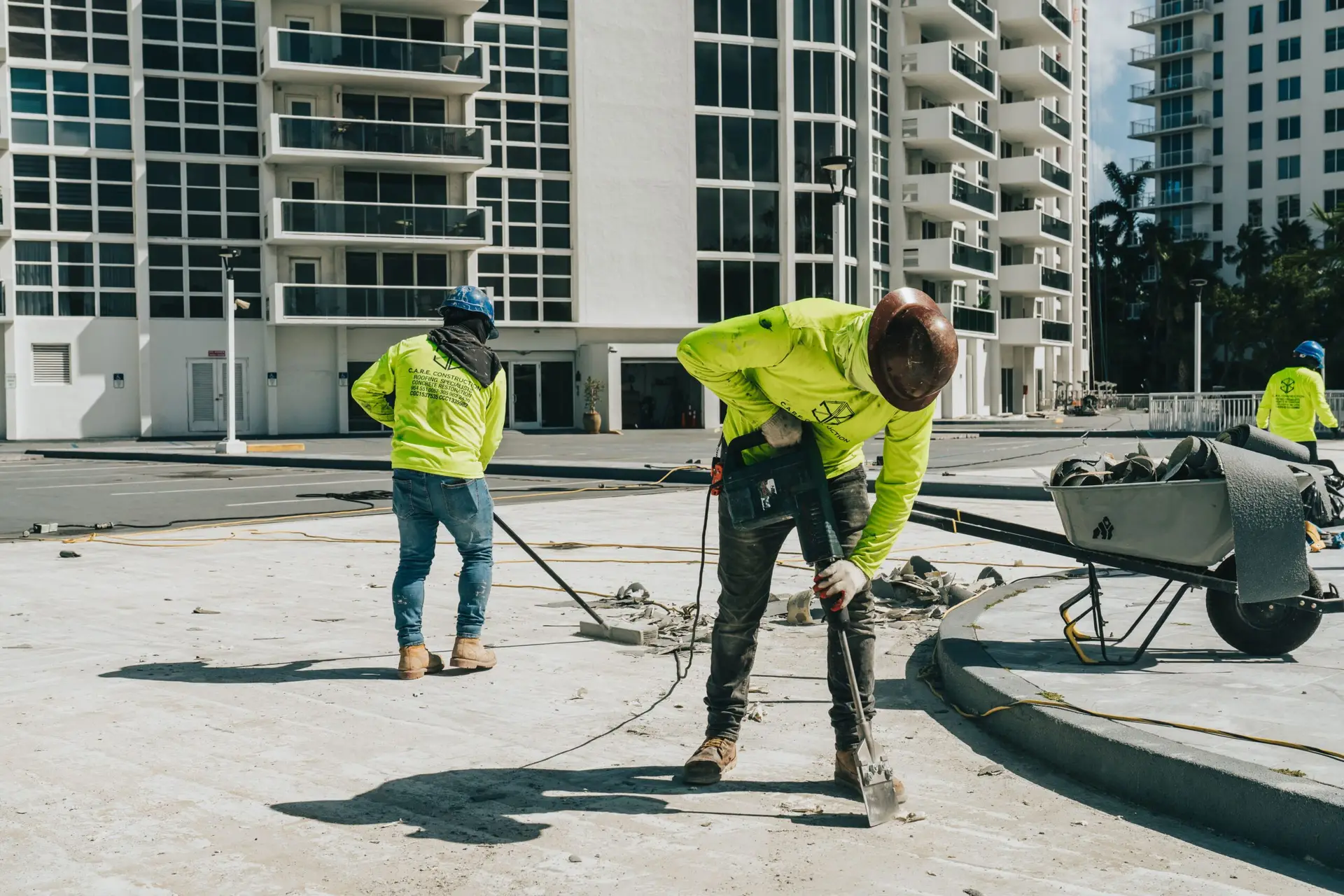
Residents may temporarily lose access to balconies. Furniture, planters, flooring, shutters, or other belongings may need to be removed. Exterior access equipment may affect sidewalks, parking areas, entrances, and pool decks.
High-rise work can also require swing stages, scaffolding, lifts, temporary protection, and controlled work zones.
Boards should establish a communication plan before construction begins so residents understand access restrictions, work sequencing, expected noise, and safety requirements.
Why Repair Quantities Can Increase During Construction
One of the most difficult budgeting issues in concrete restoration is hidden deterioration.
The full extent of delaminated concrete may not be visible until sounding, testing, or demolition begins.
Once damaged material is removed, additional corroded reinforcement may also be discovered.
Before approving a contract, boards should understand how additional quantities will be measured, documented, priced, and authorized.
This reduces disputes if the project expands beyond the original estimate.
Should Every Balcony Be Repaired at Once?
Not necessarily.
A phased project may make sense when deterioration is concentrated on particular elevations or stacks.
However, repeated mobilization and exterior access can increase costs when crews have to return multiple times.
A building-wide restoration may be more efficient when similar waterproofing, concrete, railing, or coating problems exist across many balconies.
The decision should be based on engineering findings, building condition, access costs, future maintenance needs, and the association’s budget rather than price alone.
Choosing a Balcony Repair Contractor
Condo boards should compare more than the total price at the bottom of each proposal.
A meaningful comparison should consider the concrete repair scope, reinforcement work, waterproofing, access equipment, coatings, railings, protection, permitting responsibilities, cleanup, and procedures for additional quantities.
Contractors should also understand how to operate around occupied condominium buildings.
C.A.R.E. Construction provides concrete restoration, balcony and catwalk slab repair, deck waterproofing, structural repair, painting, railing work, and related building-envelope services throughout South Florida.
Plan Balcony Repairs Around the Whole Assembly
Effective balcony repair in Miami, FL requires more than filling cracks or resurfacing a deck.
The board needs to understand whether the problem involves concrete deterioration, reinforcement corrosion, waterproofing, drainage, railings, or several connected systems.
Repairing those conditions together can help prevent the same moisture problem from damaging newly restored concrete.
If your condominium has spalling balconies, failed deck coatings, recurring water intrusion, rust staining, or repair recommendations from an engineer, contact C.A.R.E. Construction to discuss the restoration scope required for the property.
Frequently Asked Questions About Balcony Repair in Miami, FL
How do I know if a condo balcony needs repair?
Common warning signs include cracked concrete, rust staining, spalling, exposed reinforcement, peeling deck coatings, water stains on the slab below, loose railing components, and recurring leaks. Any falling concrete or deterioration involving structural components should be evaluated promptly by qualified professionals.
What causes balcony concrete to crack and spall?
Balcony deterioration is often caused by repeated moisture intrusion, reinforcement corrosion, failed waterproofing, inadequate concrete cover, coastal chloride exposure, or movement within the concrete assembly. In South Florida, humidity, heavy rain, and salt-laden air can accelerate these conditions over time.
Can a balcony be repaired without replacing the entire slab?
Yes, in many cases. Localized deterioration may be repaired by removing unsound concrete, treating or repairing reinforcement, rebuilding the affected section, and restoring the protective waterproofing or coating system. More extensive damage may require partial or full slab repair.
Does balcony repair in Miami, FL require a permit?
Structural balcony repairs and other regulated construction may require permits. Miami-Dade County excludes structural damage from its minor-repair provisions, and municipalities may have their own permitting procedures. The project team should confirm requirements with the authority having jurisdiction before work begins.
Who should inspect a damaged condo balcony?
If structural deterioration is suspected, a Florida-licensed architect or structural engineer may need to evaluate the balcony and determine the appropriate repair requirements. The contractor then performs the construction work according to the approved plans, specifications, permits, and field direction.
Is balcony waterproofing enough to stop concrete deterioration?
Not if the concrete and reinforcement are already damaged. Waterproofing can help limit future moisture intrusion, but deteriorated concrete and corroded reinforcement must be addressed first. A complete repair may require both concrete restoration and a new waterproofing or protective coating system.
How long does condo balcony repair take?
The schedule depends on the number of balconies, extent of concrete deterioration, access requirements, engineering, permitting, waterproofing, railing work, inspections, and weather. A localized repair may be completed relatively quickly, while a high-rise or building-wide restoration project can require significantly more coordination.
Can residents stay in the building during balcony repairs?
In many condominium projects, residents remain in the building while exterior restoration is underway. Individual balconies may be temporarily closed, and residents may need to remove furniture and personal items. Noise, dust, access restrictions, scaffolding, and controlled work zones may also affect daily building operations.
Why does balcony damage sometimes look worse after demolition starts?
Concrete deterioration can extend beyond the areas visible from the surface. Once crews remove loose or damaged material, they may uncover additional delaminated concrete or corroded reinforcement. This is why condo boards should establish a clear process for documenting and pricing additional quantities before construction begins.
Should all balconies in a condo be repaired at the same time?
Not always. The best approach depends on the extent and location of deterioration, engineering recommendations, access costs, waterproofing conditions, and the board’s budget. Some properties benefit from phased repairs, while widespread deterioration may make a building-wide restoration program more efficient.
Can balcony deterioration affect a Florida milestone inspection?
Yes. Deteriorated balcony slabs, structural cracking, concrete spalling, or other structural deficiencies may be identified during a milestone inspection. The licensed architect or engineer determines whether the condition qualifies as substantial structural deterioration and what additional investigation or repair is required.
How often should condo balconies be inspected for damage?
There is no single maintenance schedule that applies to every building. Boards should follow the recommendations of their design professionals and the maintenance requirements of installed waterproofing and coating systems. Routine visual checks can also help identify cracking, failed sealants, peeling coatings, standing water, and other developing conditions before they become more extensive.