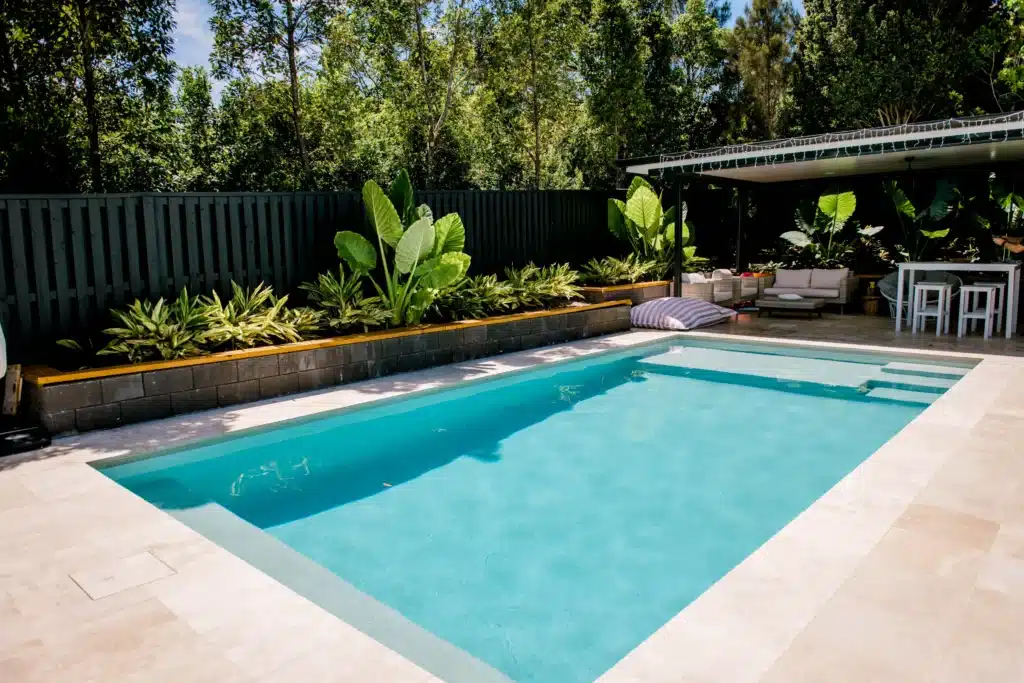
A concrete pool deck takes more abuse than almost any other surface on a South Florida property. It sits in direct sun for hours every day, gets wet and dries out repeatedly, bears foot traffic, pool chemicals, and salt air, and has to perform through a climate that puts material stress on concrete year-round without the moderating effect of a true winter season.
When a pool deck starts showing cracks, lifting sections, surface flaking, or discoloration, most property owners assume it is normal wear and plan to deal with it eventually. The problem is that pool deck damage in South Florida rarely stays static. Cracks that let water in become larger cracks. Lifting sections become trip hazards. Surface spalling exposes the concrete substrate to chloride penetration and starts the corrosion cycle that drives more serious structural deterioration.
Understanding what is actually causing the damage, and what the right repair approach looks like for each type, is what separates a repair that holds from one that looks good for a season and then opens back up. This guide covers the most common causes of concrete pool deck damage in South Florida, the warning signs to watch for, and how professional concrete pool deck repair services address each problem correctly.
Why South Florida Pool Decks Deteriorate Faster
The factors that drive concrete deterioration in South Florida are not secrets, but they are often underestimated when property owners are evaluating how urgent a repair situation actually is.
Chlorine and chemical exposure Pool chemicals are corrosive to concrete over time. Chlorine, pH adjusters, and algaecides that splash, drain, or are tracked onto the deck surface work into the concrete pores and break down the cement paste that holds the aggregate together. This is one of the primary drivers of surface scaling and pitting on pool decks that see heavy use.
UV radiation and heat cycling South Florida’s solar exposure is among the most intense in the continental United States. Concrete pool decks absorb and radiate heat throughout the day, expanding as temperatures rise and contracting as they drop in the evening. Over years, this thermal cycling works on joints, cracks, and material interfaces, gradually widening small separations into larger ones.
Salt air and chloride penetration Properties within a few miles of the Atlantic coast face airborne chloride exposure that accelerates the corrosion of any steel reinforcement embedded in the deck slab. As rebar rusts, it expands inside the concrete, creating internal pressure that eventually fractures the surface from below. This is the same mechanism that drives spalling on building facades and parking structures throughout Broward County, and it is equally active on pool decks.
Ground movement and soil conditions South Florida’s soil profile is not uniform. Sandy soils drain quickly but provide inconsistent support. Areas with organic fill, clay pockets, or fill material placed during original construction can settle unevenly under a pool deck slab, causing sections to sink, lift, or separate at control joints. Pool decks are also subject to hydrostatic pressure from the pool shell itself, which can shift the surrounding soil and affect slab support over time.
Moisture cycling Between pool splashing, rain, irrigation overspray, and humidity, South Florida pool decks rarely stay fully dry for extended periods. Repeated wet-dry cycles drive moisture into the concrete, carrying dissolved salts and chemicals deeper with each cycle. This progressive contamination accelerates the deterioration of both the concrete surface and any embedded reinforcement.
Common Types of Concrete Pool Deck Damage
Not all pool deck damage looks the same or has the same cause. Identifying the damage type correctly is the first step toward specifying a repair that will actually address the underlying problem rather than just covering it over.
Surface scaling and pitting Scaling is the loss of the concrete surface layer in thin flakes or sheets, often over a broad area. Pitting appears as isolated small craters in the surface. Both are typically caused by chemical attack from pool water and cleaning products, freeze-thaw damage in climates where it occurs, or the use of deicing salts. In South Florida, scaling is almost always chemical or UV-driven. Surface scaling repair involves removing the damaged layer and applying a bonded repair overlay or coating system rated for pool deck environments.
Cracks in a concrete pool deck fall into several categories, each with different implications. Shrinkage cracks are fine, shallow cracks that typically appear within the first few years after a slab is poured and do not indicate structural movement. Control joint cracks occur at the intentional saw-cut or tooled joints in the slab and are expected. Structural cracks are wider, deeper, and often show displacement between crack faces or continue to grow over time. These indicate movement in the slab or substrate and require more than surface patching to address properly.
Concrete pool crack repair that addresses only the surface of a structural crack without addressing the cause of the movement will reopen. In many cases, structural cracks in pool decks need to be routed and sealed with a flexible polyurethane sealant that can accommodate continued minor movement, or the underlying soil support issue needs to be corrected before the surface repair is made.
Lifting and sinking sections When sections of a pool deck rise above or drop below adjacent sections, the cause is almost always differential movement in the substrate. Sinking occurs when the soil beneath a slab section compresses, washes out, or consolidates under load. Lifting occurs less commonly but can result from hydrostatic pressure, tree root intrusion, or expansive soil conditions.
Lifted or sunken sections create immediate trip hazards and are a property liability concern. The repair approach depends on the cause: mudjacking or slab leveling techniques can raise sunken sections by injecting material beneath the slab, while sections that have lifted due to root intrusion or hydrostatic pressure may require removal, cause correction, and replacement.
Spalling and exposed aggregate Spalling on a pool deck, where chunks of concrete break away from the surface, is often rebar corrosion-driven in South Florida. When rust streaking is visible alongside spalling, or when tapping on the surface reveals hollow delaminated areas, the damage has progressed past the surface layer and requires removal of all unsound concrete, rebar treatment, and patching with an appropriate repair mortar before any surface finish is applied.
Joint failure Expansion and control joints in a pool deck are designed to accommodate movement and prevent random cracking. When joint sealants fail, harden, or are missing, water infiltrates the joint and accelerates deterioration of the adjacent concrete edges. Joint sealant replacement is routine maintenance, but joints that have been neglected for years may have developed adjacent concrete damage that needs to be addressed at the same time.
Swimming Pool Concrete Deck Repair: Matching the Fix to the Problem
There is no single repair approach that works for all pool deck damage. The right method depends on the damage type, depth, location, and the surface finish the property owner wants to end with. Here is how professional concrete pool deck repair services approach the most common scenarios.
Overlay systems for surface damage When the structural integrity of the slab is sound but the surface is scaled, pitted, or worn, a bonded concrete overlay is often the most cost-effective solution. The existing surface is mechanically prepared to open the pores and create a profile for the new material to bond to. A polymer-modified overlay is then applied in one or more coats to restore the surface level and provide a new wear surface.
Overlay systems for pool decks must be specified for the chemical and UV exposure they will face. Not every overlay product is appropriate for pool environments, and products that are not rated for pool deck use will break down and delaminate within a season or two.
Crack repair and routing For non-structural surface cracks, crack chasing with a grinder or router, followed by filling with a semi-rigid epoxy or polyurethane filler, addresses the cosmetic issue while providing some movement accommodation. For structural cracks with displacement or ongoing movement, a flexible joint sealant that can move with the concrete is appropriate at the crack face, sometimes combined with underlying soil investigation if movement is ongoing.
Concrete pool crack repair at control joints Failed joint sealant is removed completely, the joint faces are cleaned and dried, a backer rod is installed to control the depth of sealant application, and a pool-rated polyurethane or silicone joint sealant is applied and tooled. This is maintenance-level work, but it has a significant impact on how much water reaches the substrate and surrounding concrete edges.
Spall repair with rebar treatment For areas with exposed or corroding rebar, the repair sequence follows the standard concrete restoration protocol: remove all unsound concrete to sound substrate and 20mm behind the rebar face, mechanically clean the rebar to bare metal, apply a corrosion inhibiting coating to the cleaned steel, and fill with a polymer-modified repair mortar with chloride resistance appropriate for the coastal South Florida environment. The repaired area is then feathered or built up to the surrounding surface profile.
Slab stabilization for sunken sections Sections that have sunk due to soil consolidation can sometimes be raised using polyurethane foam injection, which fills voids beneath the slab and lifts it back toward its original elevation without major demolition. This approach is faster and less disruptive than full slab replacement but is only appropriate when the slab itself is otherwise structurally sound and the cause of sinking has been identified and is not ongoing.
Full section replacement When a section of pool deck is beyond repair because the concrete is extensively cracked, heavily contaminated, or structurally compromised, removal and replacement of that section is the right approach. Trying to overlay or patch a section that has failed throughout its depth produces a short-lived result and delays the inevitable while adding cost.
Pool Deck Concrete Repair: What the Process Looks Like on a Professional Job
Property owners evaluating quotes for swimming pool concrete deck repair benefit from understanding what a professional job actually involves, because the steps that differentiate a lasting repair from a temporary fix are often not visible in the finished surface.
A professional repair sequence begins with a thorough assessment of the deck, including delamination sounding across the full surface area, crack mapping, documentation of any rebar corrosion indicators, and evaluation of joint conditions and drainage patterns. This assessment drives the repair specification.
Surface preparation is mechanical, not chemical. Grinding, scarifying, or shot blasting the substrate creates the profile necessary for bonded overlays and repair mortars to achieve proper adhesion. Skipping surface preparation is the single most common cause of premature repair failure on pool decks and on concrete surfaces generally.
Repair materials are selected for compatibility with the existing substrate, the pool environment, South Florida’s UV and chemical exposure conditions, and the desired final finish. The specification matters. A contractor who uses whatever repair product is available at the supply house rather than one that is engineered for the application and exposure is not providing a professional service.
Application follows product instructions for mixing ratios, temperature windows, lift thickness, and curing requirements. In South Florida’s heat, managing material temperature and curing conditions is an active part of the job, not an afterthought.
The finished repair is documented with photographs and, on commercial or HOA properties, with written records that support future maintenance planning and any required recertification documentation.
C.A.R.E. Construction Provides Concrete Pool Deck Repair Services Across South Florida
Pool deck damage in South Florida does not improve on its own. Cracks widen, spalls deepen, and what starts as a surface issue works its way into the structural layer and the rebar below. The repair scope and cost that comes with waiting consistently exceeds what early intervention would have cost.
C.A.R.E. Construction Inc. provides professional concrete pool deck repair services for residential and commercial properties throughout Broward County and the South Florida region. Our team assesses the full extent of deck damage, specifies materials and methods matched to the South Florida environment, and delivers repairs built to last through the heat, humidity, and chemical exposure that pool decks here face every day.
If your pool deck is showing cracks, spalling, lifting sections, or surface deterioration, contact us for an honest assessment of what it needs and what the repair will involve.
Call us: 954-551-0057 (Broward) | 305-962-2430 (Miami) Email: office@careconstructioninc.com Visit: careconstructioninc.com
Frequently Asked Questions
How much does concrete pool deck repair cost in South Florida?
Cost depends heavily on the type and extent of damage, the repair method required, and the size of the affected area. Surface overlay work on a pool deck in average condition typically runs between $3.00 and $8.00 per square foot. Spall repair with rebar treatment, crack routing and sealing, or slab stabilization are priced separately based on scope. A site assessment is the only way to arrive at an accurate number for a specific property.
Can I repair a cracked pool deck myself?
Small, non-structural surface cracks can be addressed with consumer crack fillers as a temporary measure. For any crack showing displacement, ongoing movement, or water infiltration into the substrate, professional assessment and repair is appropriate. DIY crack repair on a structural crack typically closes the surface while the underlying movement continues, and the repair reopens within a season.
How long does a concrete pool deck repair last?
A properly executed repair using correctly specified materials on a well-prepared substrate typically lasts 7 to 15 years depending on the repair type and how well the deck is maintained afterward. Repairs done without adequate surface preparation or with incompatible products often fail within one to three years.
Is a permit required for pool deck repair in Broward County?
Cosmetic repairs and sealant replacement generally do not require permits. Work involving structural repair, slab replacement, or changes to the pool deck configuration may require permits from the City of Hollywood or Broward County Building Department. A licensed contractor can advise on permit requirements for a specific project scope.
What is the difference between resurfacing and repairing a pool deck?
Repair addresses specific areas of damage: cracks, spalls, sunken sections, or failed joints. Resurfacing applies a new surface layer over the existing slab after preparation. The two are often done together, with repairs completed first and a resurfacing overlay applied over the full deck to create a uniform finished surface.