Spalling concrete is one of those problems that looks cosmetic until it is not. What starts as a few flaking patches on a column, wall, or deck surface can progress into exposed rebar, structural deterioration, and repair costs that multiply with every season it goes unaddressed.
In Florida, the timeline from early-stage spalling to serious structural concern is shorter than most property owners expect. The combination of salt air, relentless humidity, freeze-thaw-free but UV-intense conditions, and the specific construction methods common to South Florida buildings creates an environment where concrete deteriorates faster than the national average. For buildings in Broward County approaching their 40-year recertification, visible spalling is not just a maintenance issue. It is a code compliance concern that inspectors will flag.
This guide covers what causes spalling concrete, how to recognize the warning signs before damage deepens, what repair options exist depending on severity and location, and when the scope of the problem calls for a professional concrete restoration contractor rather than a patch kit from a hardware store.
What Is Spalling Concrete and Why Does It Happen?
Spalling refers to the breaking, chipping, flaking, or crumbling of the concrete surface layer. It can appear as shallow surface pitting, larger chunks separating from the face of a wall or column, or deep cavities where the concrete has broken away entirely and exposed the reinforcing steel underneath.
The mechanism behind most spalling in Florida buildings is corrosion of the embedded steel reinforcement. When carbon dioxide or chloride ions penetrate the concrete and reach the rebar, the steel begins to rust. Rust occupies significantly more volume than the original steel, and that expansion exerts pressure on the surrounding concrete from the inside out. Eventually the concrete cracks, and then it breaks away. This is why spalling almost always worsens over time: once the concrete cracks, moisture and chlorides reach the rebar faster, accelerating the corrosion cycle.
Several factors drive how quickly this happens in Florida specifically.
Salt air and chloride exposure Properties within a few miles of the coast are exposed to airborne chlorides that penetrate concrete more aggressively than in inland environments. South Florida’s proximity to the Atlantic and the Gulf means that a large percentage of the region’s building stock is in elevated chloride exposure zones. Salt air attacks the concrete cover over rebar and accelerates the corrosion timeline significantly.
Humidity and moisture cycling Florida’s humidity keeps concrete surfaces in a near-constant state of moisture exposure. Concrete is porous, and sustained moisture exposure allows carbonation and chloride penetration to advance steadily. The wet-dry cycling during and after rain events drives moisture deeper into the concrete with each cycle.
Poor original concrete cover Building codes specify minimum concrete cover over reinforcing steel to protect it from environmental exposure. Older buildings in South Florida, particularly those constructed before current code requirements, were sometimes built with insufficient cover depth. When the concrete layer over rebar is thin to begin with, corrosion reaches the steel faster.
Age and construction era A significant portion of Broward County’s building stock dates from the 1960s through the 1980s, a period during which concrete mix designs and construction practices did not always account for long-term durability in coastal environments. Buildings from this era are now at the age where rebar corrosion and spalling become active maintenance and compliance concerns.
Warning Signs That Spalling Is Getting Worse
Recognizing spalling early, before it reaches the rebar or compromises structural capacity, makes repair significantly simpler and less expensive. These are the signs property owners and managers should be watching for.
Surface staining and rust streaks Brown or orange staining running down a concrete wall or column surface is often the first visible indicator that rebar corrosion is occurring beneath. The rust is leaching through the concrete as the steel oxidizes. By the time staining is visible on the surface, the corrosion process is already underway.
Hairline cracking along rebar lines Cracks that follow a linear pattern, often running parallel to a wall edge or in a grid pattern consistent with the rebar layout inside, indicate that the expansion from rusting steel is already stressing the concrete. These cracks are distinct from settlement or shrinkage cracks, which tend to appear at corners or in diagonal patterns.
Delamination Tapping on a concrete surface with a hammer or metal rod and listening for a hollow sound indicates that the concrete has separated internally from the layer beneath it. Delaminated areas look intact from the outside but have lost their bond, and they are at immediate risk of breaking away under load, vibration, or further moisture intrusion.
Visible flaking or chipping Once the concrete surface begins to visibly break away in layers, flakes, or chunks, the problem has progressed past the early warning stage. Repair flaking concrete before any significant section detaches, particularly on elevated surfaces like balconies, parapets, and parking structures where falling concrete creates a safety liability.
Exposed rebar When reinforcing steel is visible through the concrete surface, the damage is advanced. Exposed rebar is actively corroding at an accelerated rate because it has no concrete protection remaining. The repair scope at this stage typically includes treatment of the steel surface in addition to concrete replacement.
How to Repair Spalling Concrete: An Overview by Severity
The right repair approach depends on the depth and extent of the damage, the location of the affected area, and whether rebar is involved. Here is how repair strategy changes across severity levels.
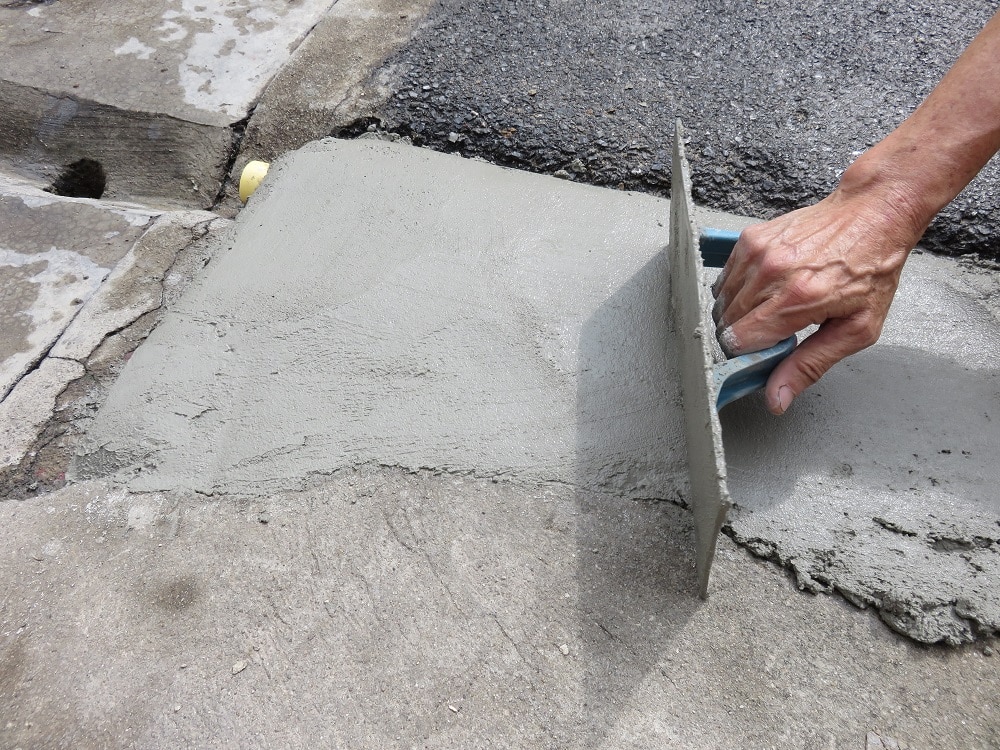
Surface-level spalling without rebar involvement For shallow spalling where the damage has not reached the reinforcing steel, repair involves removing all loose and delaminated material, cleaning and profiling the sound concrete substrate, and applying a polymer-modified repair mortar to restore the surface profile. The repair area must be properly bonded to the existing concrete, which typically requires a bonding agent applied before the repair mortar is placed.
This category covers the majority of early-intervention concrete spall repair on walls, columns, and horizontal surfaces. When addressed before rebar exposure, these repairs are relatively straightforward and cost-effective.
Spalling with rebar exposure When damage has reached the steel, the repair scope expands. All loose concrete must be removed to sound material, typically to a depth of at least 20mm behind the rebar to allow the repair mortar to fully encapsulate the steel. The exposed rebar must be cleaned of all rust using mechanical or chemical methods, and a corrosion inhibitor is applied to the cleaned steel surface before patching. Repair mortar with low permeability and chloride resistance is specified to reduce the likelihood of recurrence.
For crumbling concrete repair in this category, the integrity of the surrounding concrete also needs to be evaluated. Delamination sounding should be performed around the repair area to identify any adjacent areas that appear intact but have lost bond.
Widespread or structural spalling When spalling is distributed across a large area, involves multiple columns or load-bearing elements, or has progressed to the point where structural capacity may be affected, the scope moves beyond patch repair into concrete restoration engineering. This level of work requires a professional assessment, potentially involving a structural engineer, to determine the extent of the damage and specify the appropriate repair system. In buildings subject to Broward County’s 40-year milestone inspection, widespread spalling findings will require documentation of the repair scope and professional oversight of the work.
Vertical Concrete Repair: Why It Requires a Different Approach
Horizontal surfaces like decks and floors allow repair mortar to be placed and finished without fighting gravity. Vertical surfaces, columns, and overhead soffits present a different set of challenges that affect both material selection and application method.
Vertical concrete repair requires repair mortars specifically formulated to stay in place without slumping or sagging during application and curing. Standard repair mortars applied to vertical surfaces will slump if they do not have the right rheological properties, which compromises the finished repair and the bond to the substrate.
For deeper repairs on vertical surfaces, form-and-pour methods using fluid concrete or grout are sometimes more appropriate than trowel-applied mortars. Overhead repairs on soffits and the underside of elevated slabs are particularly demanding and often require forming and bracing to hold the repair material in place while it gains strength.
In Florida’s heat, curing management matters. High ambient temperatures accelerate the hydration of repair mortars, which can result in shrinkage cracking if the repair dries too quickly. Shading, misting, and curing compounds are used to control the moisture loss rate during the critical early curing period.
Property owners who have attempted vertical or overhead spalling repairs with off-the-shelf products and found the results unsatisfying, either because the patch falls out or cracks within a season or two, are almost always dealing with a material selection or application method issue rather than a problem that cannot be fixed.
Concrete Block Wall Crack Repair in Florida Buildings
CBS construction, concrete block or masonry walls, is the dominant structural system for residential and commercial buildings throughout South Florida. Crack repair in concrete block walls is related to but distinct from spalling repair on poured concrete.
Concrete block wall crack repair addresses two different categories of cracking. Cosmetic or hairline cracks in the block or mortar joints, which are common in aging CBS construction and typically result from thermal movement, minor settlement, or mortar shrinkage, can be addressed with joint repointing or surface sealing. Structural cracks, which show displacement between crack faces, widen over time, or appear at stress concentration points like window and door corners, require engineering evaluation before repair to determine the underlying cause.
For exterior block walls in Florida, crack repair must also consider water infiltration. Unrepaired cracks in the block wall assembly allow water to penetrate the wall and drive moisture into the interior. In high-rainfall months, even small cracks in a south or east-facing wall can allow significant water intrusion during wind-driven rain events. Repair material for exterior block wall cracks must be compatible with the existing masonry, allow for the thermal movement the wall will experience, and be followed by a water-resistant coating or sealer on the exterior face.
Buildings in South Florida with CBS walls showing efflorescence, white mineral deposits on the surface, are experiencing water movement through the block. This is a reliable indicator that crack repair and exterior waterproofing should be assessed together rather than in isolation.
When to Call a Concrete Restoration Contractor
The question most property owners arrive at after assessing their spalling situation is whether this is a job they can handle with store-bought products or whether it requires a professional.
The honest answer is that surface-level cosmetic repairs on non-structural elements in low-consequence locations, a small section of a garden wall, a decorative column base, a few chips in a concrete step, are within reach of a careful property owner using quality repair products and proper surface preparation.
Anything beyond that belongs with a professional concrete restoration contractor. The factors that push a job into professional territory include any rebar exposure, delamination covering more than a small isolated area, spalling on structural elements such as load-bearing columns, beams, or elevated slabs, damage on vertical or overhead surfaces that requires specialty materials and methods, buildings in or approaching the 40-year recertification process in Broward County, and any situation where falling concrete creates a safety liability for tenants or the public.
The risk of DIY repair in those categories is not just a poor cosmetic outcome. Improperly executed concrete spall repair can trap moisture behind the patch, accelerate corrosion of partially treated rebar, and leave a surface that looks restored but continues to deteriorate underneath. At that point, the professional repair scope is larger and more expensive than it would have been if addressed correctly the first time.
How to Repair Flaking Concrete: A Summary of the Correct Process
Regardless of who performs the work, the correct process for how to repair flaking concrete follows the same sequence.
Remove all loose, delaminated, and unsound concrete to a sound substrate. This step cannot be skipped or minimized. A repair applied over anything less than sound concrete will fail. Clean the substrate thoroughly, removing dust, oils, and any surface contamination. If rebar is exposed, clean it mechanically to bare metal and apply a corrosion inhibitor. Apply a bonding agent to the prepared concrete surface and allow it to reach the proper tack before placing repair mortar. Apply repair mortar in appropriate lift thicknesses for the product being used, building up in layers for deeper repairs. Finish and cure the repair in accordance with product requirements, protecting it from direct sun and rapid moisture loss during the curing period. Apply a penetrating sealer or protective coating to the repaired area and the surrounding concrete to reduce future moisture and chloride penetration.
Skipping or shortcutting any of these steps, which is common in low-bid repair work, is the primary reason concrete repairs fail prematurely.
C.A.R.E. Construction Handles Concrete Restoration Across South Florida
Concrete deterioration in South Florida is predictable, but that does not make it any less urgent. The longer spalling goes unaddressed, the deeper the damage gets, and the more the repair scope and cost expand.
C.A.R.E. Construction Inc. provides professional concrete restoration services for residential and commercial properties throughout Broward County and the South Florida region. Our team assesses the full extent of spalling and concrete damage, specifies the appropriate repair system for the substrate and exposure conditions, and executes the work to the documentation standards required for 40-year recertification and property management records.
If your building has visible spalling, rust staining, cracking, or concrete that sounds hollow when tapped, contact us for an assessment before the next rain season gets ahead of you.
Call us: 954-551-0057 (Broward) | 305-962-2430 (Miami) Email: office@careconstructioninc.com Visit: careconstructioninc.com
Frequently Asked Questions
Can I repair spalling concrete myself?
For small, shallow repairs on non-structural surfaces with no rebar involvement, a careful property owner with quality materials can achieve acceptable results. For anything involving exposed rebar, structural elements, overhead or vertical surfaces, or widespread damage, professional repair is the appropriate approach.
How long does concrete spall repair last?
A properly executed repair with correct materials and substrate preparation typically lasts 10 years or more. Repairs done without adequate surface prep, with incompatible materials, or on surfaces where the underlying cause of spalling has not been addressed will often fail within a few years.
Does spalling concrete mean the structure is unsafe?
Not necessarily, but it depends on the location and extent. Surface spalling on non-structural elements is a maintenance concern. Spalling on load-bearing columns, beams, or elevated slabs, particularly with rebar exposure, requires professional structural evaluation to determine whether the damage has affected load capacity.
How much does crumbling concrete repair cost in South Florida?
Cost varies significantly with scope. Small patch repairs on isolated areas may run a few hundred dollars. Large-scale concrete restoration on a commercial building or residential tower with widespread rebar corrosion can run into six figures. Getting a professional assessment with a defined repair scope is the only way to arrive at a reliable number for a specific property.
What is the 40-year recertification and how does spalling affect it?
Broward County requires commercial buildings reaching 40 years of age to undergo structural and electrical milestone inspections. Visible spalling, particularly on structural elements, is one of the findings most commonly flagged during these inspections. Buildings with unaddressed concrete deterioration will be required to complete documented repairs before recertification is granted.