After a hurricane or tropical storm passes through South Florida, the pressure to assess your property and get ahead of repairs is immediate. Insurance timelines are real, contractor availability tightens fast, and the damage that is visible from the ground is rarely the full picture of what the storm actually did to your roof.
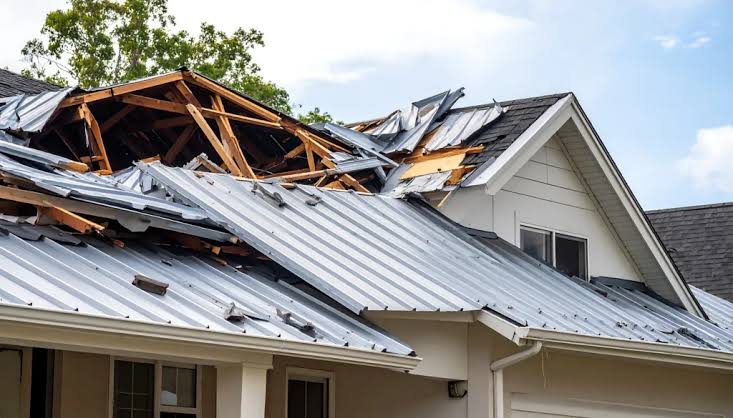
The challenge is that hurricane roof damage is not always obvious. Missing shingles and collapsed sections are easy to spot. But the damage that costs property owners the most over time is often the kind that does not announce itself right away: lifted membrane seams that reseal themselves temporarily, compromised edge metal that looks intact from below, cracked flashings that allow water in only during heavy rain, and insulation that has absorbed moisture before any interior sign appears.
This guide is written for property owners and managers in South Florida who want to know what to look for after a storm, what steps to take before a contractor arrives, and how to protect their position with their insurance carrier from the moment the storm passes. It covers both residential and commercial roof hurricane damage, because the signs and the stakes are different depending on what type of building you are managing.
Why South Florida Roof Damage After Hurricanes Looks Different
Not all hurricane roof damage follows the same pattern, and South Florida’s building stock creates some specific considerations that property owners in other hurricane-prone regions may not face.
Flat and low-slope roofs are the dominant commercial roof type in Broward County. TPO, EPDM, modified bitumen, and built-up roofing systems respond differently to hurricane-force wind events than pitched roofs do. Wind uplift on a flat roof is more uniformly distributed across the entire surface, with the highest forces concentrated at corners and perimeter edges. Damage on these systems often appears as membrane blow-off at edges, seam separations, or displacement of roof-mounted equipment rather than the missing shingles that are easy to identify on a residential pitched roof.
CBS construction is common, but parapet walls fail. The concrete block construction typical of South Florida commercial and multifamily buildings provides structural resistance to wind loads, but parapet walls, the vertical extensions above the roofline, are a consistent point of vulnerability. Parapet failures during high-wind events can pull adjacent roofing membrane with them, expose the building interior to direct water infiltration, and create falling hazards.
Age and prior maintenance determine how much damage a storm causes. A roofing system that entered the storm with delaminated seams, lifted edge metal, or failed flashings will sustain significantly more hurricane roof damage than a well-maintained roof of the same type and age. Inspectors and insurance adjusters who understand South Florida roofing can often distinguish pre-existing deterioration from storm-caused damage, and that distinction has real implications for what a claim covers.
Post-storm moisture infiltration compounds quickly. After a storm, exposed or compromised roofing systems face continued rainfall from the active weather pattern before and after the storm’s peak. Damage that was modest immediately after the storm can worsen considerably within days if temporary protection is not in place.
Identifying Hurricane Roof Damage: What to Look for From the Ground
Before anyone accesses the roof, a ground-level inspection provides a useful starting picture. It is also the safest starting point immediately after a storm, when the roof surface may be wet, covered in debris, or structurally compromised in ways that are not visible from a distance.
Missing or displaced roofing material For residential pitched roofs, scan the entire roof plane for missing shingles, gaps in tile coverage, or sections where the underlayment is exposed. For low-slope commercial roofs, look along the perimeter and at roof edges for sections where membrane has lifted, curled, or separated from the building edge. Displaced gravel or aggregate from built-up roofing on the ground below is an indicator that the roof surface was disturbed.
Damaged or missing edge metal Edge metal, fascia, and drip edge flashings are among the first components to be displaced in high-wind events. Gaps in the edge metal profile, bent or lifted sections, or sections that have blown off entirely are visible from the ground on most buildings. Missing edge metal leaves the membrane termination exposed and vulnerable to further wind and water intrusion.
Debris impact damage Scan visible roof surfaces for impact marks, penetrations, or accumulated debris that may have caused damage. Flying debris during a storm can puncture roofing membranes, crack tiles, and displace flashings. Any area where debris has accumulated on the roof warrants closer inspection because the weight and moisture retention of debris accelerates damage to the surface beneath it.
Damaged or displaced rooftop equipment HVAC units, exhaust fans, satellite dishes, and other rooftop equipment that has shifted position, separated from its curb, or been visibly damaged in a storm creates two concerns: the equipment itself and the integrity of the roof opening and flashing at that location. Equipment displacement is visible from the ground on many buildings.
Gutter and downspout condition Gutters and downspouts that have been pulled from the building, crushed, or displaced indicate that wind forces on the roof edge were significant. Gutter damage is also a signal to inspect the fascia and edge metal above the affected area more closely when roof access is safe.
Interior signs visible without roof access After a storm, interior ceiling staining, wet insulation visible through open penetrations, or water pooling in interior spaces are indicators that the roof has been compromised. These are not roof-level observations, but they are useful diagnostics that help prioritize where the roof inspection should focus.
Commercial Roof Hurricane Damage: Specific Signs for Flat and Low-Slope Systems
Commercial roofing systems have damage patterns that are distinct from residential roofs and that require specific attention during post-storm inspection.
Membrane separation at seams and laps Seams on TPO and EPDM membranes are welded or adhered at the factory or in the field. High-wind uplift forces can separate seams that were marginally bonded before the storm or that have degraded over time. Seam separations may reseal temporarily under the weight of standing water or as the membrane relaxes after the wind event, which is why they are easily missed during a casual inspection. A professional post-storm inspection uses probing and testing to confirm seam integrity rather than relying on visual assessment alone.
Membrane blow-off at perimeter The perimeter and corners of a flat roof are the areas of highest wind uplift pressure. Membrane that has separated from the edge metal or termination bar and is lying flat may not be visible from the ground but represents a significant breach in the roofing system. Any section of membrane that has moved from its installed position, even a few inches, has broken the waterproof continuity of the system.
Punctures from debris impact Debris ranging from tree branches to displaced building components can puncture or tear flat roof membranes. These punctures are sometimes small enough that they are not obvious during a surface walkthrough but large enough to allow meaningful water infiltration during the next rain event. A systematic post-storm walkthrough by a qualified commercial roofing contractor covers the full surface area rather than just the visually obvious damage zones.
Parapet and coping displacement Coping caps on parapet walls are vulnerable to displacement in high-wind events. Copings that have shifted, partially lifted, or separated at joints allow water to enter the parapet wall assembly and potentially the roof-to-wall connection. On older CBS buildings, parapet wall cracking or movement during a storm may also have disrupted the counterflashing at the base of the wall, affecting the roof edge seal.
Rooftop drain and scupper obstruction Storm debris frequently accumulates at roof drains and scuppers. Post-storm ponding on a flat roof that would otherwise drain adequately is often the result of debris-blocked drainage rather than a new structural or slope problem. Blocked drains after a storm create sustained load on the roof structure and accelerate any membrane damage that is already present.
What to Do Immediately After a Hurricane: Step by Step
The actions a property owner takes in the hours and days immediately after a storm affect both the physical outcome for the building and the insurance claim that follows. Here is the correct sequence.
Prioritize safety before any inspection Do not access the roof immediately after a storm. Wait until wind and rain have fully passed and the structure has been visually confirmed to be safe from the ground. Be aware of downed power lines, displaced rooftop equipment, and structural damage that may affect access safety.
Document everything before any cleanup or temporary repair This step is critical for insurance purposes and is one of the most commonly mishandled parts of post-storm response. Before any debris is moved, any tarps are installed, or any emergency repairs are made, photograph and video document the full extent of visible damage from the ground and, when safe, from the roof. Capture wide-angle shots showing the overall roof condition, close-up shots of specific damage areas, and images of any interior damage that is visible. Date and timestamp all documentation.
Report to your insurance carrier promptly Most commercial and residential property insurance policies require timely notice of loss. Contact your carrier or broker as soon as the storm has passed to initiate the claim. Ask about their inspection and documentation requirements and timeline. Understand whether your policy requires you to mitigate further damage and what that means in terms of pre-approved repair actions.
Install temporary protection where needed If the roof has sustained damage that leaves interior space exposed to continued weather, temporary tarping or emergency membrane patching is appropriate and typically required by your policy to prevent additional loss. This is mitigation, not repair, and temporary protection does not affect your claim negatively when it is properly documented. Use a licensed contractor for any temporary roof work to ensure it is done safely and in a way that does not complicate the permanent repair.
Get a professional inspection before settling a claim Insurance company adjusters inspect a high volume of properties after major storm events and are working under time pressure. A professional roof inspection by a qualified commercial roofing contractor, conducted independently and with thorough documentation, provides a second set of eyes on the damage and ensures that items missed in the adjuster’s assessment can be formally included in the claim before it closes. For commercial properties, the cost of a professional post-storm inspection is almost always recoverable through the claim it supports.
Do not sign off on a settlement before the scope is confirmed Accepting a settlement before the full extent of damage has been documented and assessed by a contractor you trust can leave cost on the table. Storm damage on commercial roofing systems is not always fully visible in a single inspection, particularly for membrane systems where seam separation or insulation saturation may only become apparent over time. A contractor experienced with hurricane damage roof repair can advise on what documentation supports the full claim scope before you accept a settlement figure.
Hurricane Damage Roof Repair: What the Process Looks Like
Once temporary protection is in place and the insurance process is underway, permanent hurricane damage roof repair follows a defined sequence.
The full damage assessment is the starting point. For commercial roofing systems, this includes core sampling to check insulation saturation, seam testing across the full roof, flashing inspection at all penetrations and transitions, and structural assessment of any areas where uplift forces may have affected the deck or attachment. The assessment produces a documented scope of repairs that supports both the insurance claim and the contractor’s bid.
Material procurement follows scope confirmation. After a major storm event, roofing materials are in high demand across the region, and lead times can extend. A contractor with established supplier relationships and regional project volume is better positioned to secure materials without significant delay.
Permanent repairs address all damage in the documented scope, including membrane repair or replacement in affected areas, seam re-welding or re-bonding, flashing repair and replacement, edge metal reinstallation, rooftop equipment re-securing and re-flashing, and surface restoration where applicable. Work is performed to current Florida Building Code requirements and documented for the insurance file and building maintenance records.
For commercial properties approaching 40-year recertification in Broward County, post-storm repairs should also be evaluated in the context of the building’s upcoming inspection requirements. Damage that triggers a recertification-level assessment of the roofing system can sometimes be addressed more efficiently when the repair and recertification documentation are coordinated from the start.
C.A.R.E. Construction Is Ready When the Storm Passes
Post-hurricane response in South Florida moves fast. Contractors fill up, materials get allocated, and insurance claim windows have real deadlines. Having a qualified commercial roofing contractor assess your property promptly after a storm is the most direct way to protect both the building and the claim.
C.A.R.E. Construction Inc. has served commercial and residential property owners throughout Broward County and South Florida since 2009. Our licensed and insured team provides post-storm roof inspections, temporary emergency protection, insurance documentation support, and full hurricane damage roof repair for properties of all sizes. We understand the local building codes, the insurance claim process, and what South Florida roofing systems need after a major weather event.
If your property sustained hurricane roof damage or you want a professional assessment to confirm your roof came through intact, contact us. The sooner you know what you are dealing with, the better your options.
Call us: 954-551-0057 (Broward) | 305-962-2430 (Miami) Email: office@careconstructioninc.com Visit: careconstructioninc.com
Frequently Asked Questions
How do I know if my roof has hurricane damage if there are no visible leaks?
The absence of visible interior leaks does not mean the roof is undamaged. Membrane seam separations, insulation saturation, and flashing failures can exist for weeks before interior water signs appear. A professional post-storm roof inspection is the only reliable way to confirm whether the system is intact or compromised after a significant storm event.
What is the deadline for filing a hurricane roof damage claim in Florida?
Florida statutes and individual policy terms govern claim filing deadlines, and these can vary. Generally, property insurance claims in Florida should be filed as promptly as possible after a loss event. Consult your policy and your insurance broker for the specific requirements that apply to your coverage.
Will a temporary tarp hurt my insurance claim?
No. Installing a temporary tarp or emergency patch to prevent additional water intrusion after a storm is considered damage mitigation and is typically required by property insurance policies. It does not negatively affect a properly documented claim. Document the condition of the roof before and after temporary protection is installed.
How long does hurricane damage roof repair take on a commercial building?
Timeline depends on the scope of damage, material availability, permitting requirements, and contractor scheduling. Minor repairs may be completed within days of assessment. Larger commercial roof replacements or significant repair projects can take several weeks from material procurement through completion. Post-storm demand across the region can extend timelines.
Should I use the contractor my insurance company recommends?
You are generally not required to use a contractor selected by your insurance carrier, though your policy should be reviewed for any specific requirements. Selecting a licensed, experienced local contractor with documented commercial roofing experience in South Florida and familiarity with the insurance claim process is typically in the property owner’s best interest regardless of who makes the recommendation.