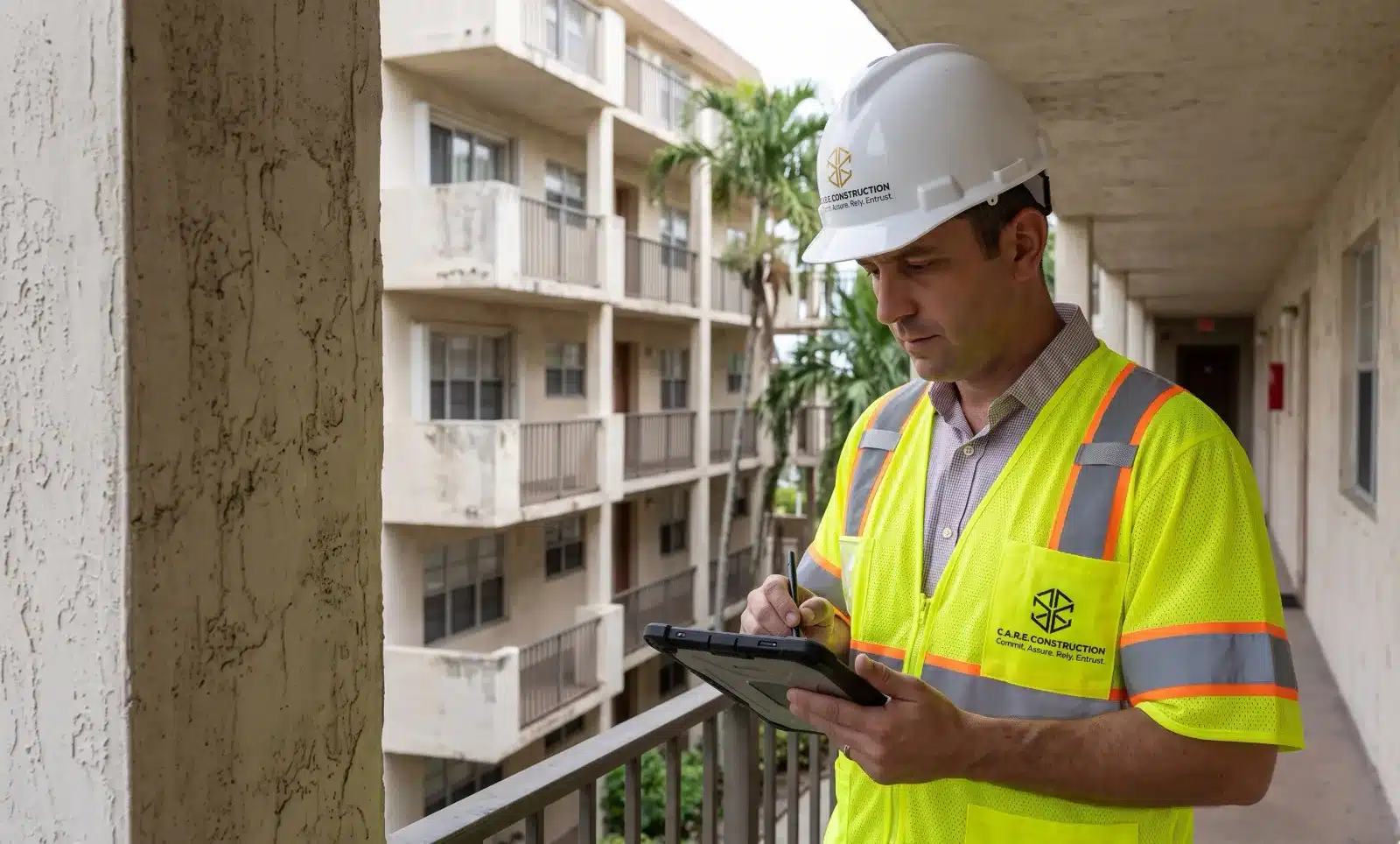
For years, many South Florida condo boards knew to keep one major building deadline on their radar: the 40-year certification. But as Florida’s inspection requirements have changed, that familiar benchmark has become much less straightforward.
Today, a building may be subject to a milestone inspection, a local certification requirement, or both. The problem is that older terminology is still widely used, which can make it difficult for boards to know whether the inspection schedule they have relied on for years still applies.
That uncertainty can quickly become a planning problem. If a board misunderstands what the building requires, it may have less time to coordinate the right professionals, prepare for possible repairs, and determine how those costs will be handled.
This guide explains the milestone inspection vs. 40-year certification distinction so condo boards can understand what applies to their building and make informed decisions before an inspection requirement turns into a much more urgent issue.
What Is a Florida Milestone Inspection?
A milestone inspection is a structural safety inspection established under Florida law for qualifying residential condominium and cooperative buildings.
Current Florida law generally requires milestone inspections for residential condominium and cooperative buildings that are three or more habitable stories. The first inspection is normally required when the building reaches 30 years of age, followed by another inspection every 10 years. A local enforcement agency can require the first inspection at 25 years when local circumstances, including proximity to salt water, justify an earlier inspection.
This requirement is focused primarily on the structural condition of the building.
The purpose is to determine whether major structural components show substantial structural deterioration and whether additional investigation or repairs are necessary. It is not intended to determine whether an older building complies with every provision of the current Florida Building Code.
Who Performs the Milestone Inspection?
A Florida-licensed architect or engineer must be responsible for the milestone inspection. A team of qualified professionals may participate, but the appropriate inspection work and reports must be signed and sealed by the responsible licensed professionals.
This is important for condo boards selecting vendors.
A contractor such as C.A.R.E. Construction can perform concrete restoration, waterproofing, roofing, balcony repairs, structural repairs, and other construction resulting from the inspection. The contractor does not replace the architect or engineer who performs and signs the statutory structural inspection.
Phase One and Phase Two Milestone Inspections
Every milestone inspection begins with Phase One.
During Phase One, the architect or engineer visually evaluates the building’s major structural components. If no substantial structural deterioration is found, Phase Two is generally not necessary.
If substantial structural deterioration is identified, Phase Two is required. The professional can then use additional destructive or nondestructive testing as necessary to understand the damaged areas and develop repair recommendations.
Under current Florida law, Phase One generally must be completed within 180 days after the building owner receives the required written notice. When substantial structural deterioration is identified through Phase Two, local governments must require qualifying repairs to commence within a specified period that cannot extend beyond 365 days after receipt of the Phase Two report.
For a condo board, this is where an inspection can quickly become a construction-planning issue.
What Is a 40-Year Certification?
Building certification programs are generally local requirements rather than the statewide milestone inspection program.
South Florida jurisdictions had building safety inspection programs long before Florida adopted statewide milestone inspections. This is where the familiar phrase “40-year certification” originated.
The important point is that the term no longer accurately describes the current inspection age for many buildings.
Miami-Dade No Longer Waits Until 40 Years
Miami-Dade’s current certification program generally places inland buildings into the process at 30 years and coastal buildings at 25 years, followed by certification every 10 years.
Miami-Dade certification also evaluates structural and electrical safety. Property owners who receive a Notice of Required Certification generally have 90 days to submit the required reports.
For this reason, a Miami condo board should not wait for the building’s 40th birthday simply because board members or previous records refer to a “40-year inspection.”
The current notice from the authority having jurisdiction should guide the association.
Milestone Inspection vs. 40-Year Certification: The Main Difference
The simplest distinction is the source and purpose of each requirement.
A milestone inspection comes from Florida’s statewide condominium and cooperative structural inspection law. Its primary focus is structural safety and substantial structural deterioration.
A certification program is established and administered locally. Its scope depends on the jurisdiction. Miami-Dade, for example, requires structural and electrical safety evaluations.
The inspection ages can now overlap. A coastal Miami-Dade condominium might encounter requirements around 25 years, while another qualifying building may enter a statewide milestone cycle at 30 years.
This overlap is one reason boards should not attempt to determine compliance based solely on the name of a previous inspection.
Instead, confirm what the local building department requires and whether an existing inspection report has been accepted for the applicable requirement.
Can a Certification Inspection Satisfy a Milestone Inspection?
In some circumstances, an inspection performed under another qualifying structural inspection program may be accepted for milestone purposes.
Florida law gives local enforcement agencies authority to accept certain previous structural inspection reports when they substantially comply with milestone inspection requirements.
That does not mean every certification automatically counts.
The board should obtain confirmation from the local enforcement agency and the architect or engineer responsible for the inspection.
This is particularly important when dealing with an older report that was completed before current milestone requirements took effect.
What Should Condo Boards Do When an Inspection Identifies Repairs?
The inspection report is only the first step.
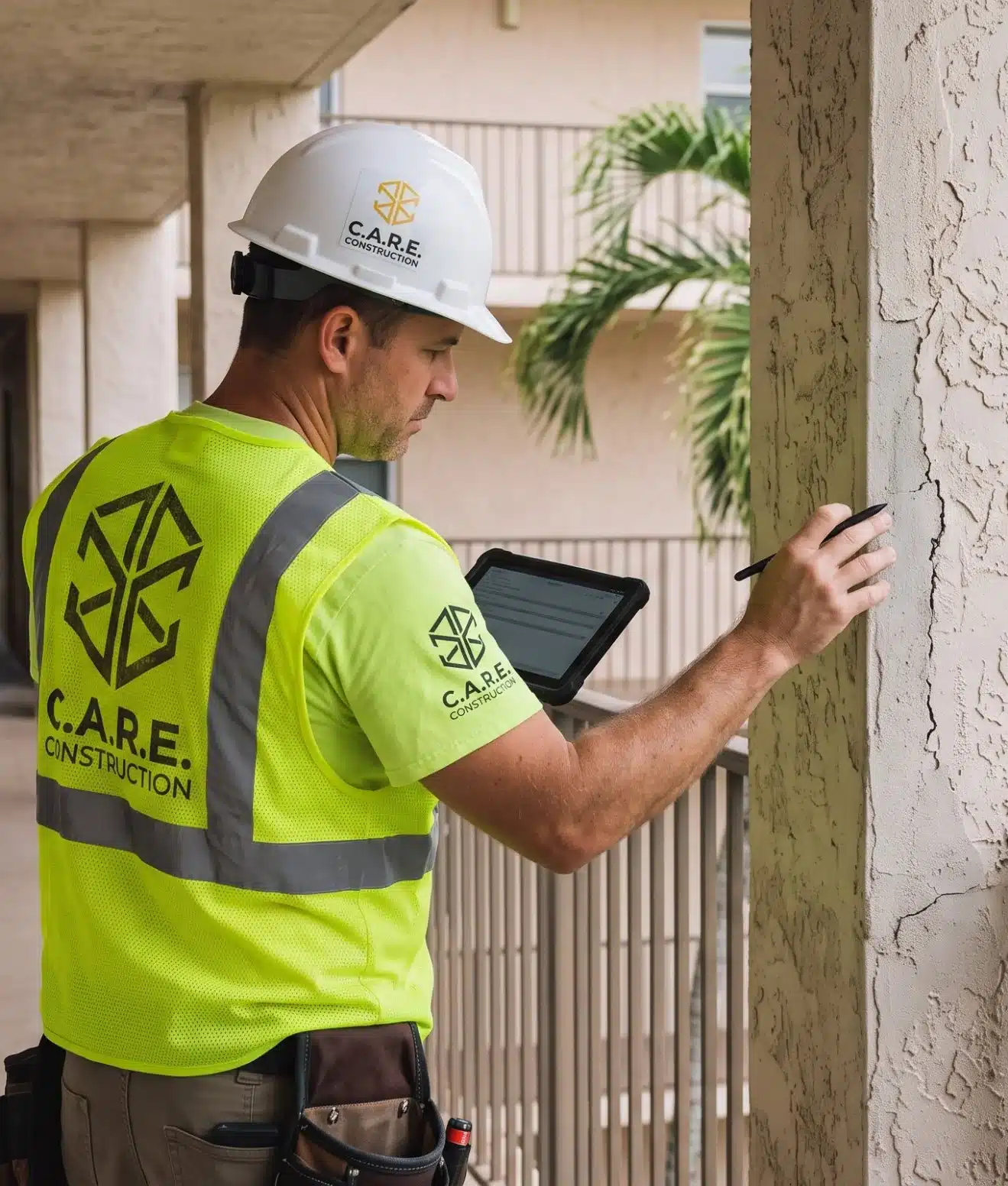
If the architect or engineer identifies concrete deterioration, damaged balconies, waterproofing failures, structural garage problems, deteriorated beams or columns, or other deficiencies, the board needs to convert those findings into a defined construction project.
The engineer or architect may prepare repair drawings and specifications. Contractors can then price the same scope rather than independently guessing what needs to be repaired.
For buildings with concrete deterioration, the work may involve removing unsound concrete, addressing damaged reinforcement, rebuilding concrete sections, restoring waterproofing, repairing balconies or catwalks, and applying protective coatings.
The source of deterioration should also be considered.
If a balcony has spalling concrete because water repeatedly penetrated a failed deck coating, repairing the concrete without restoring the waterproofing leaves part of the problem unresolved.
Why Boards Should Prepare Before the Inspection Deadline
Inspection requirements do not create deterioration. They reveal conditions that may already have been developing for years.
Recurring leaks, rust stains, concrete spalling, deteriorated balcony coatings, garage cracking, and loose exterior materials should not be ignored until an official notice arrives.
Early investigation gives the board more time to understand the property, obtain engineering guidance, develop repair documents, compare contractor proposals, evaluate reserve funding, and communicate with residents.
Waiting until a formal inspection identifies extensive deterioration can compress all of those decisions into a regulatory timeline.
Moving From Inspection to Restoration
For Florida condo boards, the question is not simply whether the property needs a milestone inspection vs. 40-year certification.
The board needs to understand which requirements apply to the building today, what the licensed architect or engineer finds, and how the association will complete any resulting repairs.
C.A.R.E. Construction works with condominium associations, property managers, engineers, and other project professionals throughout South Florida on the construction side of this process. Services include concrete restoration, waterproofing, commercial roofing, balcony and catwalk repair, structural garage work, beam and column repair, and other building-envelope restoration.
If an inspection has identified corrective work at your property, contact C.A.R.E. Construction to discuss the restoration scope and the next steps required to move from inspection findings into construction.
Note: This article provides general information and is not legal or engineering advice. Inspection requirements vary by building and jurisdiction, and boards should confirm current requirements with their local building department and licensed design professionals.
Frequently Asked Questions About Milestone Inspections and 40-Year Certification
Is a milestone inspection the same as a 40-year certification in Florida?
No. A milestone inspection is a statewide structural inspection requirement for qualifying condominium and cooperative buildings under Florida law. A building certification is generally a local program administered by a county or municipality. Depending on the jurisdiction, the two requirements may overlap, but condo boards should not assume they are automatically interchangeable.
Are 40-year certifications still required in Miami-Dade County?
Miami-Dade still has a building certification program, but the traditional term “40-year certification” no longer accurately describes the current schedule for many buildings. Current Miami-Dade requirements generally begin at 30 years for inland buildings and 25 years for qualifying coastal condominium and cooperative buildings, followed by inspections every 10 years.
Does a Florida condo need a milestone inspection at 25 or 30 years?
Under current Florida law, qualifying condominium and cooperative buildings generally require their first milestone inspection when they reach 30 years of age. A local enforcement agency may require inspection at 25 years based on local circumstances, including environmental conditions such as proximity to salt water.
Who is allowed to perform a Florida milestone inspection?
The inspection must be performed under the responsibility of a Florida-licensed architect or engineer. Other qualified professionals may participate as part of the inspection team, but the appropriate inspection work and reports must be signed and sealed by the licensed professionals responsible for them.
What happens if a milestone inspection finds structural deterioration?
If Phase One identifies substantial structural deterioration, a Phase Two inspection is required to investigate the condition further. The resulting report can identify damaged areas, recommend repairs, and determine whether additional investigation is necessary. Local governments must also establish timelines for addressing substantial structural deterioration, and qualifying repairs must be commenced within the timeframe required by law.
Can a contractor perform the repairs required after a milestone inspection?
Yes, but the contractor and inspection professional have different roles. The architect or engineer evaluates the building and establishes the necessary structural findings and recommendations. A licensed contractor can then perform approved concrete restoration, waterproofing, roofing, structural repair, and other corrective construction according to the applicable plans and specifications.
Does Miami-Dade certification include an electrical inspection?
Yes. Miami-Dade’s building certification program requires reports addressing structural and electrical safety. This is one important difference between the local certification program and Florida’s statewide milestone inspection requirement, which is focused on structural safety.
Can an existing certification report satisfy the milestone inspection requirement?
Possibly, depending on the jurisdiction and whether the report meets the applicable requirements. Miami-Dade has updated its certification program and report forms to incorporate milestone inspection requirements, but boards should still confirm compliance with the local building department rather than assuming an older report qualifies.
How often are milestone inspections required after the first inspection?
Qualifying buildings generally require another milestone inspection every 10 years after the initial inspection. Local certification programs may also operate on 10-year cycles, but their specific procedures and scope can differ.
Should a condo board repair known problems before a milestone inspection?
Boards should not conceal or superficially cover deterioration before an inspection. However, known maintenance issues such as concrete spalling, failed waterproofing, recurring leaks, deteriorated sealants, and damaged exterior components should not necessarily be ignored until an inspection notice arrives. Addressing legitimate maintenance and restoration needs early can reduce continued deterioration and give the association more time to plan the work properly.