FAMost homeowners in South Florida do not think about their roof until something forces the issue. A leak after a storm, a failed inspection, an insurance renewal that comes back with conditions, or a buyer’s inspection during a sale that flags the roof as a concern. By the time any of those events triggers action, the roof has usually been signaling problems for longer than the owner realized.
Residential re-roofing is the process of replacing an existing roofing system with a new one, and in South Florida, it is one of the most significant maintenance decisions a homeowner can make. The climate here accelerates roofing deterioration faster than most other markets in the country. UV radiation, humidity, salt air, thermal cycling, and an active hurricane season place sustained stress on every roofing system, regardless of material or age.
This guide covers what residential re-roofing actually involves in South Florida, which residential roof types are most common in this market, how flat roofs on homes are handled differently from pitched systems, when re-roofing is the right call versus repair, and what property owners should expect from the process.
When Re-Roofing Is the Right Decision
The most common question homeowners ask is whether they need a full replacement or whether repairs will be sufficient. The honest answer is that it depends on several factors, and the threshold differs between roof types.
Age relative to expected lifespan Every residential roofing system has a rated lifespan under normal conditions, and South Florida’s climate reduces those ratings meaningfully. A roof that is approaching or has exceeded its expected service life is a re-roofing candidate regardless of whether active leaks are present. Repairing an aging roof extends its life temporarily but does not change the trajectory. For a homeowner approaching a sale, an insurance renewal, or a 40-year milestone inspection, a roof that is at end of life creates friction that replacement resolves cleanly.
Extent of damage When damage is isolated to a small, discrete area, repair is appropriate. When damage is distributed across multiple sections of the roof, involves widespread membrane or shingle deterioration, or has resulted in insulation saturation or deck damage, the cost-benefit calculation shifts toward replacement. Patching a roof that has failed broadly produces a checkerboard of repairs over an aging base that will continue to generate problems.
Insurance and code requirements Florida’s property insurance market has become significantly more restrictive regarding roof age and condition. Many carriers will not renew or write new policies on homes with roofs older than 15 to 20 years, and some require documentation of roof condition before binding coverage. Citizens Property Insurance and many private carriers have specific age thresholds and inspection requirements that make re-roofing a practical necessity for homeowners managing their insurance options. Florida Building Code also restricts the number of roofing layers on a structure, which means that some re-roofing situations require full tear-off rather than overlay.
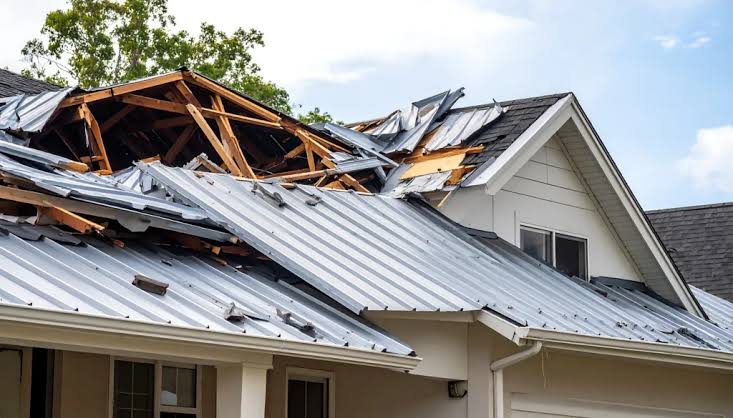
Storm damage After a significant hurricane or tropical storm event, widespread damage may make re-roofing the most practical and cost-effective path forward even on roofs that had useful life remaining. When a storm-damaged roof is also aging, the combination often tips the calculation decisively toward replacement rather than repair.
Residential Roof Types in South Florida: What Is Actually on Your Home
South Florida’s residential roofing market is more varied than in most other regions of the country. The mix of building ages, construction styles, and HOA requirements means that a single neighborhood can have four or five different roofing systems in active use. Understanding which system is on your home is the starting point for any re-roofing conversation.
Concrete tile Concrete tile is one of the most common residential roof types in South Florida, particularly in planned communities and HOA-governed neighborhoods. Tile is durable, fire-resistant, and provides excellent UV reflectance, which matters considerably in a climate where rooftop temperatures regularly exceed 150 degrees Fahrenheit. Concrete tile systems have a long service life, often 30 to 50 years, but the underlayment beneath the tile typically requires replacement before the tile itself fails. Re-roofing a tile roof often involves removing and inspecting the existing tile for reuse while replacing the underlayment, or full replacement with new tile when the existing material is beyond serviceable condition.
Clay tile Clay tile performs similarly to concrete tile and is found on older homes throughout South Florida. It is heavier than concrete tile, which has structural implications for re-roofing projects that involve a change from an existing lighter system. Re-roofing with clay tile on a structure that was not originally designed for it requires a structural assessment before installation.
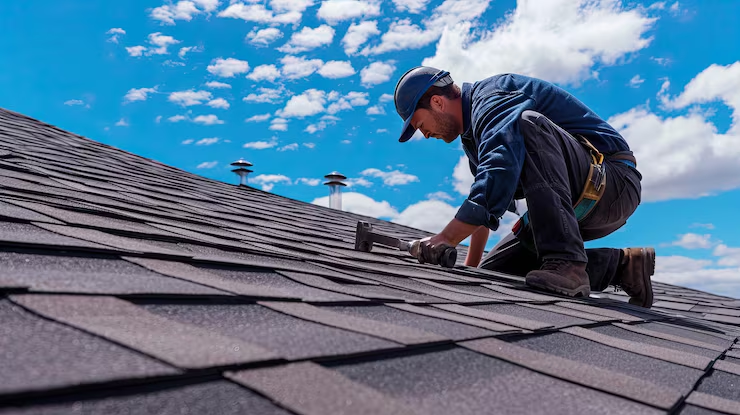
Asphalt shingles Asphalt shingles are widely used on residential roofs throughout South Florida, particularly on homes outside HOA-governed communities where aesthetic requirements are more flexible. Standard asphalt shingles have a shorter lifespan in South Florida’s UV and heat environment than their rated life suggests, often delivering 15 to 20 years of service life rather than the 25 to 30 years they might achieve in a cooler climate. Impact-resistant shingles with a Class 4 rating have become increasingly popular because they qualify for insurance discounts and perform better under the hail and debris impact conditions that storm season produces.
Metal roofing Standing seam and metal panel roofing systems are growing in popularity for residential applications in South Florida. Metal roofs carry a longer service life than asphalt shingles, typically 40 to 70 years depending on material and finish, and they provide excellent wind resistance when properly installed to Florida Product Approval specifications. The higher upfront cost of metal residential re-roofing is offset by the extended service life and the potential insurance benefits associated with wind-resistant systems.
Low-slope single-ply membranes On homes with lower-pitched or flat sections, single-ply membrane systems including TPO and modified bitumen are common. These systems are the same technology used in commercial roofing and require the same attention to seam integrity, drainage, and UV protection that flat roof applications demand in any context.
Residential Flat Roof: What It Involves and Why It Is Different
A residential flat roof, or more precisely a low-slope roof section, presents a different set of considerations than a pitched system. Many South Florida homes have flat roof sections over garages, additions, or covered patios that are connected to the main structure, and these sections often require separate attention during a re-roofing project.
Flat roof sections on homes are more vulnerable to ponding water than pitched sections because gravity does not work as effectively to shed water from the surface. Drainage must be designed into the system through slope, internal drains, or scuppers, and any residential flat roof replacement must address drainage adequacy as part of the scope.
The most common systems for residential flat roof replacement in South Florida are modified bitumen and TPO. Modified bitumen systems use torch-applied or self-adhered asphalt-based sheets with polymer modifiers that improve flexibility and UV resistance. TPO is a single-ply thermoplastic membrane that offers reflectivity and heat-weldable seams, and it is well-suited to flat sections that receive significant sun exposure.
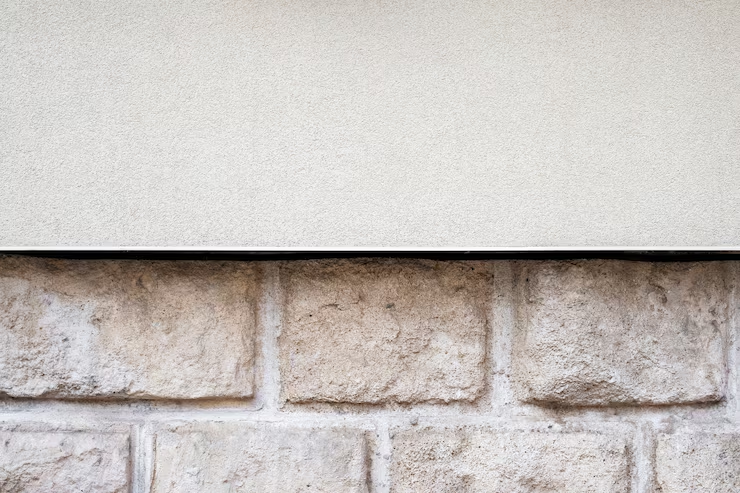
Both systems require the same fundamentals: sound substrate, proper drainage slope, fully sealed seams and penetrations, and correct termination at all edges and transitions to vertical surfaces. Residential flat roof sections that transition into walls, parapets, or vertical stucco facades require particular care at those connection points because they are common entry points for water when not properly detailed.
Homeowners who are re-roofing the pitched section of their home should treat any flat sections as part of the same scope rather than addressing them separately at a later date. Water that moves off a poorly performing flat section can affect adjacent wall assemblies and the pitched system nearby, and a coordinated approach to both produces a more complete result.
The Re-Roofing Process: What to Expect from Start to Finish
For homeowners who have not been through a residential re-roofing project before, understanding the sequence helps set realistic expectations for timeline, disruption, and decision points.
Assessment and proposal A professional re-roofing project starts with a site visit and roof assessment. The contractor evaluates the existing system, the deck condition beneath it, the drainage configuration, and any special conditions like solar panels, rooftop equipment, or unusual penetration configurations that affect the scope. The assessment drives the proposal, which should include a defined scope of work, material specifications, and a timeline.
Permitting Residential re-roofing in Florida requires permits from the local building department. In Hollywood and throughout Broward County, this means submitting plans or a permit application, paying permit fees, and scheduling inspections at defined stages of the work. A licensed roofing contractor manages the permitting process as part of the project, and the permit must be obtained before work begins. Unpermitted re-roofing creates problems during future property transactions and insurance renewals and is not an acceptable shortcut.
Tear-off and deck inspection For a full re-roof, the existing roofing system is removed down to the deck. This step is required when the existing system has exceeded the allowable number of roofing layers under Florida Building Code, when the existing system is incompatible with the new installation, or when deck inspection is necessary to confirm its condition before the new system is installed. The deck inspection that follows tear-off sometimes reveals conditions, rotted sheathing, deteriorated insulation, or damaged structural members, that add scope to the project. Understanding this possibility upfront helps avoid surprises.
Installation New roofing system installation follows the manufacturer’s specifications and Florida Product Approval requirements for the system being installed. In South Florida, Florida Product Approval is not a formality. It confirms that the specific product and installation method have been tested and certified to perform at the wind speeds applicable to the local wind zone. Contractors who install non-approved products or use approved products in ways that deviate from the approval are producing a roof that does not meet code, regardless of how it looks when finished.
Inspection and close-out Building department inspections occur at defined stages, typically at the deck level and at final completion. After final inspection and approval, the permit is closed and the homeowner receives documentation confirming that the work was performed to code. This documentation is important for insurance purposes and for future property transactions.
Wind mitigation inspection After a re-roofing project, many homeowners in South Florida benefit from scheduling a wind mitigation inspection. Wind mitigation reports document the roof’s construction features, including deck attachment method, roof covering type, and roof shape, and are submitted to the insurance carrier to qualify for premium discounts under Florida’s wind mitigation credit program. A new roof with current code-compliant installation typically qualifies for meaningful credits.
Commercial and Residential Roofing: Where the Overlap Matters
The line between commercial and residential roofing is more permeable than many homeowners assume, particularly in South Florida where multifamily buildings, mixed-use structures, and HOA-governed communities often involve roofing systems and decision-making processes that share characteristics of both.
Townhome and condominium associations managing roof replacements across multiple units are dealing with commercial-scale procurement and project management even though the individual structures are residential. The flat or low-slope membrane systems on those buildings are the same technology used in commercial roofing. The permitting, inspection, and wind mitigation documentation requirements apply equally.
For property owners or association boards evaluating re-roofing contractors, the practical implication is that experience with both commercial and residential roofing is an advantage. A contractor who only works in one sector may not have the experience with the system types, installation methods, and documentation requirements that are relevant to the project at hand.
C.A.R.E. Construction Handles Residential Re-Roofing Across South Florida
A re-roofing project is one of the most significant investments a homeowner makes, and in South Florida’s market, the stakes around insurance compliance, wind resistance, and code documentation make the contractor selection matter considerably.
C.A.R.E. Construction Inc. provides residential re-roofing services for single-family homes, townhomes, and multifamily residential properties throughout Broward County and the South Florida region. Our team is fully licensed and insured, experienced across all major residential roof types used in this market, and familiar with the permitting, inspection, and wind mitigation documentation that re-roofing projects here require.
Whether you are dealing with storm damage, an aging roof that your insurance carrier has flagged, or a planned replacement before the next hurricane season, contact us for an honest assessment of your roof and a clear proposal for what replacement involves.
Call us: 954-551-0057 (Broward) | 305-962-2430 (Miami) Email: office@careconstructioninc.com Visit: careconstructioninc.com
FAQs
How long does residential re-roofing take in South Florida?
A typical single-family home re-roofing project takes one to three days for installation once materials are on site and the permit is in hand. Permitting timelines vary by jurisdiction and project complexity. Larger homes, tile roofs, or projects with deck repair scope take longer. The full timeline from contract to completion, including permitting, is typically two to six weeks depending on current permit processing times and material availability.
How much does residential re-roofing cost in South Florida?
Cost varies with roof size, system type, tear-off requirements, and deck condition. Asphalt shingle re-roofing on a typical South Florida home generally runs between $8,000 and $18,000. Tile systems run higher, often $15,000 to $40,000 or more depending on size and tile type. Metal roofing falls at the higher end of the range. Getting a reliable number requires a site visit and a specific proposal.
Does my homeowner’s insurance cover re-roofing?
Insurance covers storm damage, not wear and age. A roof that has reached end of life due to normal deterioration is not a covered loss. Storm-damaged roofing, documented and claimed promptly after a qualifying event, may be covered subject to your policy’s deductible and any coverage limitations. Florida’s insurance market has specific provisions around roof age and condition that affect coverage, and your specific policy terms govern what applies to your situation.
Can I re-roof over my existing roof without tearing it off?
Florida Building Code limits roofing layers on a structure. In many cases, a full tear-off is required either because the existing number of layers is already at the code limit or because the existing system must be removed to assess and address deck condition. A licensed contractor can advise on whether a tear-off is required for your specific situation.
What is a wind mitigation inspection and do I need one after re-roofing?
A wind mitigation inspection documents your roof’s construction features for your insurance carrier and qualifies you for potential premium discounts. After a re-roofing project in South Florida, scheduling a wind mitigation inspection is almost always worth the cost because the credits available for a new, code-compliant roof can reduce insurance premiums meaningfully over the years that follow.