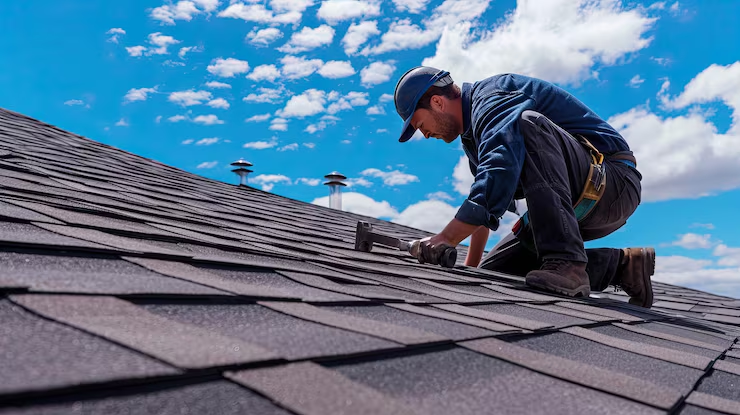
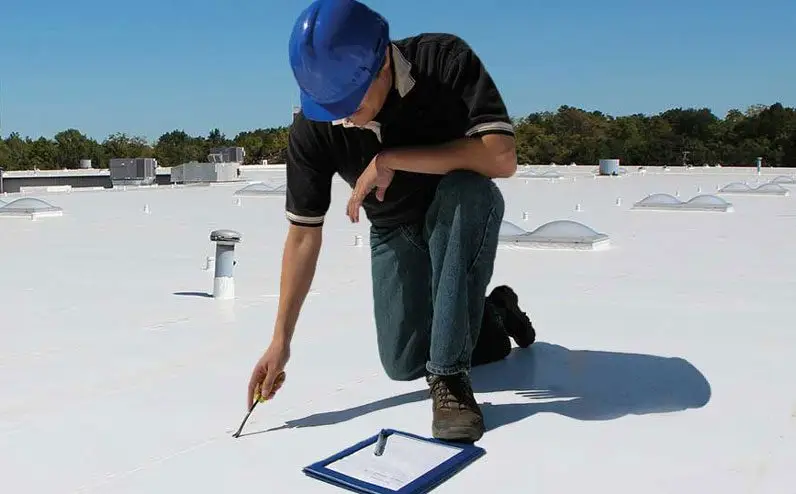
A commercial roof does not announce when something is wrong. By the time a leak appears on an interior ceiling or a tenant reports water intrusion, the damage has typically been building for weeks or months. The only reliable way to stay ahead of that progression is through a structured, consistent inspection process tied to a documented roof inspection checklist.
For commercial property owners and managers in Hollywood, FL, this is not an abstract best practice. Broward County’s climate makes it a practical necessity. Year-round UV exposure, tropical humidity, seasonal storms, and the ever-present risk of hurricane-force wind events mean that South Florida roofing systems face stresses that are simply not comparable to most other markets in the country. Inspection items that might be optional elsewhere become non-negotiable here.
This guide provides a comprehensive commercial roof inspection checklist tailored to the conditions and code requirements of Hollywood, FL. Whether you use it to prepare for a professional inspection, to conduct a basic internal walkthrough between professional visits, or to evaluate the thoroughness of a roof inspection report you have received, every item on this list exists for a reason.
Before You Get on the Roof: Pre-Inspection Preparation
A thorough commercial roof inspection starts before anyone sets foot on the roofing surface. Proper preparation protects the inspection team, improves accuracy, and ensures that findings are documented in a way that is useful over time.
Review prior inspection reports and maintenance records. If your building has a roof inspection report from a previous visit, review it before the current inspection begins. Prior findings provide a baseline for evaluating whether conditions have improved, remained stable, or deteriorated since the last assessment.
Confirm safe access to all roof areas. Identify all roof access points, including hatches, ladders, and mechanical room access. Ensure that no areas of the roof are blocked or inaccessible. A complete inspection requires access to the full roof surface.
Check weather conditions. Inspections conducted immediately after heavy rain can actually be useful for identifying drainage issues and ponding areas. However, inspections conducted on wet or slippery surfaces require additional safety precautions.
Document the roof’s age, system type, and warranty status. Knowing whether your roof is under an active manufacturer or contractor warranty affects how findings are handled. Some repairs must be performed by certified contractors to maintain warranty coverage.
Commercial Roof Inspection Checklist: Surface and Membrane
The roofing membrane or surface material is the primary weather barrier for your building. For most commercial properties in Hollywood, this means a flat or low-slope system such as TPO, EPDM, modified bitumen, or built-up roofing. Each system has specific failure modes, but the inspection points below apply broadly across system types.
Membrane condition overall. Inspect the full roofing surface for visible signs of wear, aging, or damage. Look for areas where the surface has lost its original texture or reflective coating.
Blistering or bubbling. Raised areas in the membrane indicate trapped moisture or air beneath the surface. These are early-stage failure indicators that should be flagged and monitored or repaired before they rupture.
Cracks, splits, or punctures. Any breach in the membrane surface is a potential water entry point. Pay close attention to areas around heavy foot traffic, HVAC equipment, and anywhere debris may have collected.
Seam integrity. Membrane seams are among the most common points of failure on flat commercial roofs. Inspect all laps and seams for separation, lifting edges, or gaps. In South Florida’s heat, seam adhesives and welded joints are subject to significant thermal stress over time.
Surface granule loss (modified bitumen and built-up systems). Granule coverage provides UV protection and extends membrane life. Bare or thinning areas indicate advanced weathering and should be noted in the roof inspection report.
Ponding water zones. Standing water that remains on the roof 48 hours or more after rainfall indicates drainage problems and creates sustained structural and membrane stress. Mark any known ponding areas and verify whether they correspond to drainage deficiencies or surface deflection.
Roofing Inspection Checklist: Drainage System
Drainage is one of the most critical and most commonly neglected elements of a commercial roofing inspection checklist, particularly for flat and low-slope roofs. In South Florida, where rainfall intensity during storm season can exceed several inches per hour, a compromised drainage system creates immediate and serious risk.
Interior drains. Inspect all primary roof drains for debris accumulation, damaged strainers or covers, and proper seating. Drains that are even partially blocked during a heavy rain event can cause rapid ponding that places enormous weight and pressure on the roof structure.
Scuppers and overflow drains. Scuppers are openings in the parapet wall that allow water to exit the roof at the surface level. They must be clear of debris and properly sealed at the roof connection point. Overflow drains provide a secondary exit when primary drains are overwhelmed and must never be blocked.
Gutters and downspouts. Where present on commercial buildings, gutters should be free of debris, properly pitched toward downspouts, and securely attached. Downspouts must discharge away from the building foundation.
Drain collar and flashing condition. The transition between the drain body and the roofing membrane must be fully sealed and watertight. Cracks or separations at drain collars are a common source of hidden water intrusion.
Roof slope and low spots. Verify that the roof surface maintains adequate slope toward drainage points. New low spots that were not present during prior inspections may indicate structural settling or insulation compression.
Commercial Roof Preventative Maintenance Checklist: Flashings and Penetrations
Flashings are the metal or membrane components that seal transitions between the roof surface and vertical elements: walls, curbs, equipment bases, skylights, vents, and pipes. They are the second most common failure point on commercial roofs after seams, and in a South Florida storm, a failed flashing can allow significant water entry in a matter of hours.
Perimeter and edge flashings. Inspect all edge metal, drip edges, and termination bars where the roofing membrane meets the building edge or parapet wall. Look for lifting, gaps, corrosion, or wind-displaced sections.
Parapet wall flashings and copings. Copings cap the top of parapet walls and protect the wall structure from water infiltration. Inspect coping joints, end caps, and sealant conditions. Salt air from the Atlantic accelerates corrosion in metal copings across Hollywood-area properties.
HVAC curb flashings. Every rooftop HVAC unit sits on a curb that is flashed to the roof surface. Inspect the base flashing on all four sides of each curb for separation, cracking, or gaps. HVAC units are among the most common sources of roof leaks on commercial buildings.
Pipe and conduit penetrations. Any pipe, conduit, or vent stack that passes through the roof surface requires a sealed boot or counterflashing. Inspect all penetration seals for cracking, hardening, or separation, particularly in areas with high UV exposure.
Skylight and rooftop equipment bases. Skylights, solar panels, satellite dishes, and other rooftop equipment installations must be properly integrated with the roofing membrane. Inspect all mounting points and surrounding membrane conditions for signs of stress or water intrusion.
Wall-to-roof transitions. Where a vertical wall meets the roof surface, counter-flashings and step flashings must be intact and properly lapped. These transitions are especially vulnerable during wind-driven rain events.
Roofing Inspection Checklist for Florida Storms: Wind and Structural Assessment
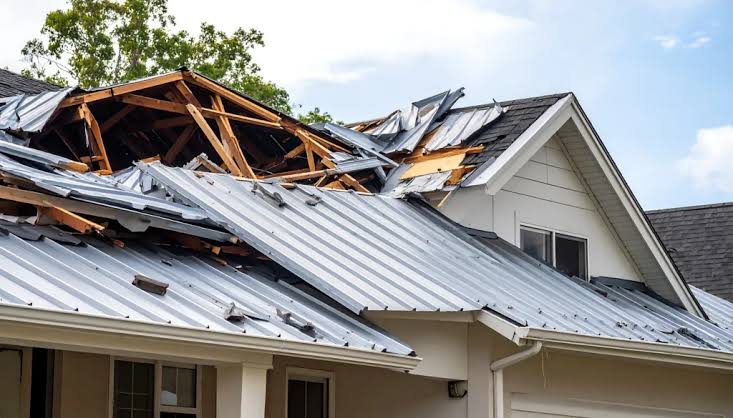
Given Hollywood’s exposure to tropical storms and hurricanes, a complete commercial roofing inspection checklist must include items specific to wind performance and structural integrity. This section is especially relevant as a pre-season checklist and following any named storm event.
Fastener and attachment security. Inspect the roof perimeter, corners, and field areas for signs of fastener back-out, membrane pull-through, or deck separation. Wind uplift forces are greatest at corners and edges, making those areas the priority for this assessment.
Edge metal and coping uplift. Inspect all edge metal for sections that have lifted, bent, or separated from the substrate. Displaced edge metal during a storm allows wind to get beneath the membrane and can lead to catastrophic uplift failure.
Roof deck condition. Where accessible, or where soft spots are felt underfoot, note any areas of deck deflection, delamination, or deterioration. A compromised deck affects the structural performance of the entire roofing system.
Parapet wall integrity. Inspect parapet walls for cracking, spalling, or signs of movement. Parapet failures during high-wind events are a documented risk in South Florida and can cause significant collateral damage.
Signs of previous uplift or displacement. Look for wrinkles, ridges, or areas where the membrane has shifted position, which may indicate past wind uplift events that were not formally assessed or repaired.
Industrial Roof Inspection: Additional Considerations for Larger Properties
For industrial and large commercial buildings in Hollywood, the standard roofing inspection checklist expands to address conditions specific to these structures.
Multiple roof levels and transitions. Industrial facilities often have roofs at varying heights with multiple transition zones. Each level change requires separate inspection of flashing conditions, water diversion, and structural connections.
Expansion joint covers. Large commercial and industrial roofs include expansion joints that allow the building structure to flex without damaging the roofing system. Inspect expansion joint covers for displacement, cracking, or failed sealant.
Rooftop equipment load points. Heavy mechanical equipment creates point loads on the roof structure. Inspect the membrane and deck around all equipment bases for signs of compression, cracking, or deflection caused by sustained weight.
Roof access walkways and pads. High-traffic areas around HVAC equipment should have protective pads or walkway systems in place. Inspect these for displacement, deterioration, or areas where they may be trapping moisture beneath.
What a Professional Roof Inspection Report Should Include
After a qualified contractor completes a commercial inspection using a thorough roofing inspection checklist, the deliverable should be a formal roof inspection report that covers the following:
A summary of the roof’s overall condition rated by severity, typically categorized as good, fair, or poor with supporting explanation. Photographs of all findings, organized by location on the roof, with captions describing what is depicted. An itemized list of deficiencies with recommended corrective actions and a priority rating for each item. Estimated remaining service life for the roofing system based on current conditions and age. Notes on any items that may affect warranty coverage, insurance standing, or upcoming recertification requirements. A recommended timeline for follow-up inspection or re-assessment.
A roof condition assessment that lacks photographs, written findings, or actionable recommendations is not a professional deliverable. Property owners should expect and require this level of documentation from any contractor performing a formal commercial roof inspection.
Inspection Frequency for Hollywood, FL Commercial Properties
The recommended inspection schedule for commercial properties in Broward County is a minimum of two professional inspections per year. The first should be conducted in April or May before hurricane season begins on June 1. The second should follow in November or December after the season closes. Additional inspections are warranted after any significant storm event, regardless of whether visible damage is apparent.
Between professional visits, property managers and building staff can use the surface, drainage, and flashing sections of this commercial roof preventative maintenance checklist as a reference for basic visual monitoring. Any item that raises a concern during an informal walkthrough should be escalated to a qualified roofing contractor for professional evaluation.
Schedule Your Professional Roof Inspection in Hollywood, FL
C.A.R.E. Construction Inc. has provided professional commercial roof inspections, detailed roof inspection reports, and structured maintenance programs for commercial properties across Hollywood, FL and the South Florida tri-county area since 2009. Our licensed and insured team brings the local knowledge, technical expertise, and documentation standards that commercial property owners and managers require.
Whether you need a pre-storm season assessment, a post-hurricane inspection, or a formal roof condition assessment for recertification or insurance purposes, we deliver thorough findings and clear recommendations every time.
Call us: 954-551-0057 (Broward) | 305-962-2430 (Miami)
Email: office@careconstructioninc.com
Visit: careconstructioninc.com
Frequently Asked Questions
What is included in a commercial roof inspection checklist? A comprehensive checklist covers the roof membrane or surface material, all seams and flashings, the drainage system including drains and scuppers, edge metal and copings, penetrations around HVAC equipment and vents, structural condition, and any signs of moisture intrusion or wind damage.
How is a roofing inspection checklist for Florida storms different from a standard inspection? A Florida-specific checklist adds emphasis on wind uplift resistance, edge metal and coping integrity, parapet wall condition, and fastener security. These items address the specific failure modes most commonly triggered by tropical storm and hurricane conditions in South Florida.
What does a roof condition assessment involve? A formal roof condition assessment evaluates every component of the roofing system against its expected performance standard for a roof of its type and age. It includes physical inspection, photographic documentation, written findings, and a recommendation for corrective action or continued monitoring.
How long should a commercial roof inspection take? The duration depends on roof size and complexity. A straightforward small commercial roof may take one to two hours. Larger properties, roofs with many penetrations, or buildings requiring industrial roof inspection protocols will require more time, sometimes a full day for very large facilities.